
## Custody Level Meaning In Prison: An Inmate Records Guide
Understanding the custody level meaning in prison is essential for legal professionals, family members, and researchers who consult inmate records. The phrase describes how correctional authorities categorize inmates for the purposes of supervision, housing, program access, and movement restrictions. This article explains the terminology, the factors that determine placement, how the designation appears in records, and practical steps to request or challenge a classification.
## Defining The Custody Level Concept
### What Custody Level Means In Practice
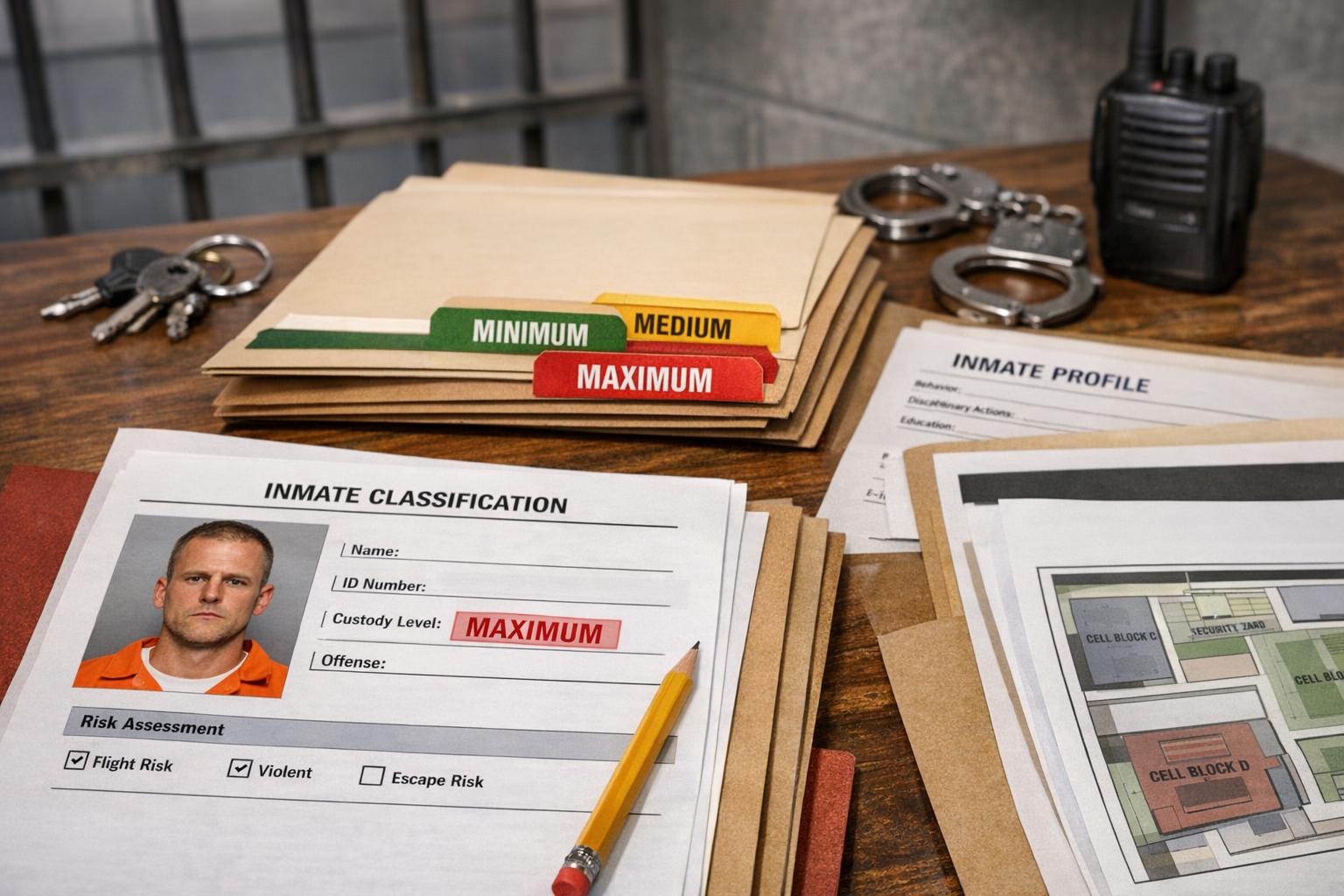
The custody level meaning in prison refers to the assessed degree of supervision and control required for an individual incarcerated within a correctional system. It is not merely a label; it governs day-to-day realities such as housing units, required security procedures, permissible activities, and eligibility for rehabilitative programs. Inmate records will typically reflect this assessment as part of the official file, often alongside the offender’s criminal history and disciplinary record.
### Distinguishing Custody Level From Prison Security Level
It is important to distinguish custody level from prison security level. A prison security level denotes the overall security profile of a facility — for example, minimum, medium, or maximum security institutions. By contrast, custody level describes the classification of an individual inmate within that broader institutional context. An inmate assigned a higher custody level may be housed in a higher security unit, but custody designation is a personal classification based on assessed risk and needs.
## How Custody Levels Are Determined
### Risk Assessment And Classification Procedures
Correctional systems rely on standardized risk assessments, behavioral history, and institutional conduct records to assign a custody level. Evaluations generally consider:
– Nature and severity of the current offense.
– Length of sentence and escape risk.
– Prior convictions and history of violence.
– Behavior while incarcerated, including disciplinary infractions.
– Mental health status, substance dependency, and treatment needs.
Most jurisdictions use an objective scoring instrument supplemented by professional judgment. The resulting classification affects placement decisions and program prioritization.
### Role Of Inmate Records In Classification
Inmate records contain the documentation that supports a custody level determination: assessment scores, mental health reports, incident reports, and prior criminal history. These documents create an audit trail that explains why an inmate received a given status. Reviewing the records helps attorneys and advocates understand the factors that drove a specific custody designation and to prepare arguments for reassessment where warranted.
## Practical Impacts Of Custody Level Assignments
### Daily Life And Program Access
The custody level meaning in prison translates into tangible differences in an inmate’s daily life. Higher custody designations typically mean:
– More restrictive housing (e.g., single cells, restricted movement).
– Limited access to work assignments, vocational training, and some educational programs.
– Tighter visitation rules, more frequent searches, and stricter movement protocols.
Lower custody levels usually allow greater freedom of movement within the facility, broader program eligibility, and fewer mobility restrictions.
### Parole, Classification Reviews, And Transfers
Custody level influences parole considerations and can affect institutional transfers. For example, inmates classified at a lower custody level may be eligible for transfer to a minimum security facility closer to their release date. Conversely, a higher custody level may delay transfer or parole reviews until behavioral improvements are demonstrated.
## Reading And Interpreting Inmate Records
### Where Custody Status Appears In Documentation
The custody level meaning in prison is commonly recorded in the front section of an inmate’s institutional file. Look for entries labeled “classification,” “custody status,” or “security designation.” These entries are typically dated and accompanied by a rationale or reference to assessment scores.
### Red Flags In Records To Monitor
Those examining records should be alert for:
– Missing or unsigned assessment forms.
– Discrepancies between behavior reports and classification rationale.
– Outdated psychiatric or medical evaluations that may affect classification accuracy.
Identification of such issues provides a basis for administrative appeals or requests for re-evaluation.
## Remedies And Administrative Procedures
### Formal Reclassification Requests
When an inmate or their representative believes the custody level is inappropriate, the formal remedy is a reclassification request or appeal. The procedure typically requires:
– Submission of a written request to the classification committee.
– Supporting documentation such as recent conduct records, treatment participation certificates, and updated risk assessments.
– Attendance at a review hearing, when permitted.
The process is administrative and governed by the facility’s regulations. Timelines and admissible evidence vary by jurisdiction.
#### Best Practices For Preparing A Reclassification Request
– Compile objective evidence of behavior improvement, including certificates from programs, letters from staff, and clear disciplinary records.
– Provide updated medical or psychological evaluations if they are relevant to the classification.
– Include a concise cover letter framing the request and referencing institutional policy that supports reclassification.
### Legal Remedies And Counsel Involvement
If administrative remedies are exhausted without relief, legal avenues may be considered. Counsel can file mandamus actions, civil rights complaints, or appeals depending on local law and the nature of the denial. Legal intervention is particularly appropriate where procedures were not followed, where records were falsified, or where classification decisions violate established standards.
## Policy Considerations And Transparency
### Importance Of Clear Classification Policies
Transparent, consistent classification policies reduce arbitrary decisions and support inmate rights. A clear articulation of factors used to determine custody level helps families and advocates interpret inmate records and reduces disputes.
### Oversight And Auditing
Regular audits of classification decisions and inmate record accuracy are essential. Oversight bodies should review whether custody level assignments align with documented assessments and whether opportunities for reclassification are accessible and fair.
## Practical Guidance For Families And Advocates
### How To Use Records Effectively
Families and advocates should request copies of relevant portions of an inmate’s file, focusing on assessment instruments, classification memos, and disciplinary records. Organize evidence of positive behavior and program participation to submit in support of reclassification petitions.
### Communicating With Correctional Staff
Communicate respectfully and through established channels. Formal letters, requests for meetings with classification staff, and documented appeals create a paper trail that can be referenced in subsequent proceedings.
## Frequently Asked Questions About Custody And Security Levels
### Can Custody Level Change Over Time?
Yes. Custody levels are intended to be dynamic. Regular reviews allow reductions or escalations based on behavior, program participation, and changing risk profiles. Documented improvements often form the basis for downgrade requests.
### Does Prison Security Level Dictate Custody Assignments?
Not necessarily. While prison security level sets the facility parameters, individual custody level determines how an inmate is managed within that facility. Transfers between facilities are possible when an inmate’s custody level changes or when specialized programs are needed.
### What Records Are Most Persuasive In A Reclassification Effort?
Recent, objective, and verifiable documentation is most persuasive: completed program certificates, clean disciplinary periods, and professional assessments from mental health providers. These items directly address the factors that classification committees evaluate.
## Administrative Remedies For Record Errors
### Correcting Inaccurate Entries
If inaccuracies are discovered in inmate records, file a formal record correction request per the institution’s policy. Provide evidence demonstrating the error and propose specific corrections. If denied, an appeal process should be followed and, where necessary, legal advice obtained.
### Maintaining Documentation
Maintain copies of all submissions, responses, and relevant records. Organized documentation strengthens the case for reassignment and provides a clear timeline in the event of disputes or appeals.



Leave a Reply