
## Practical Steps Families Should Take
When someone you love is in custody, mail becomes a lifeline. It is not just letters and cards. It is proof that someone remembered them on a bad day, a check-in on progress, a reminder of the world outside. But sending something that never arrives because of a wrong format or a missing ID is worse than not sending anything. Be intentional about it.
## Addressing Mail To An Inmate: Step-By-Step
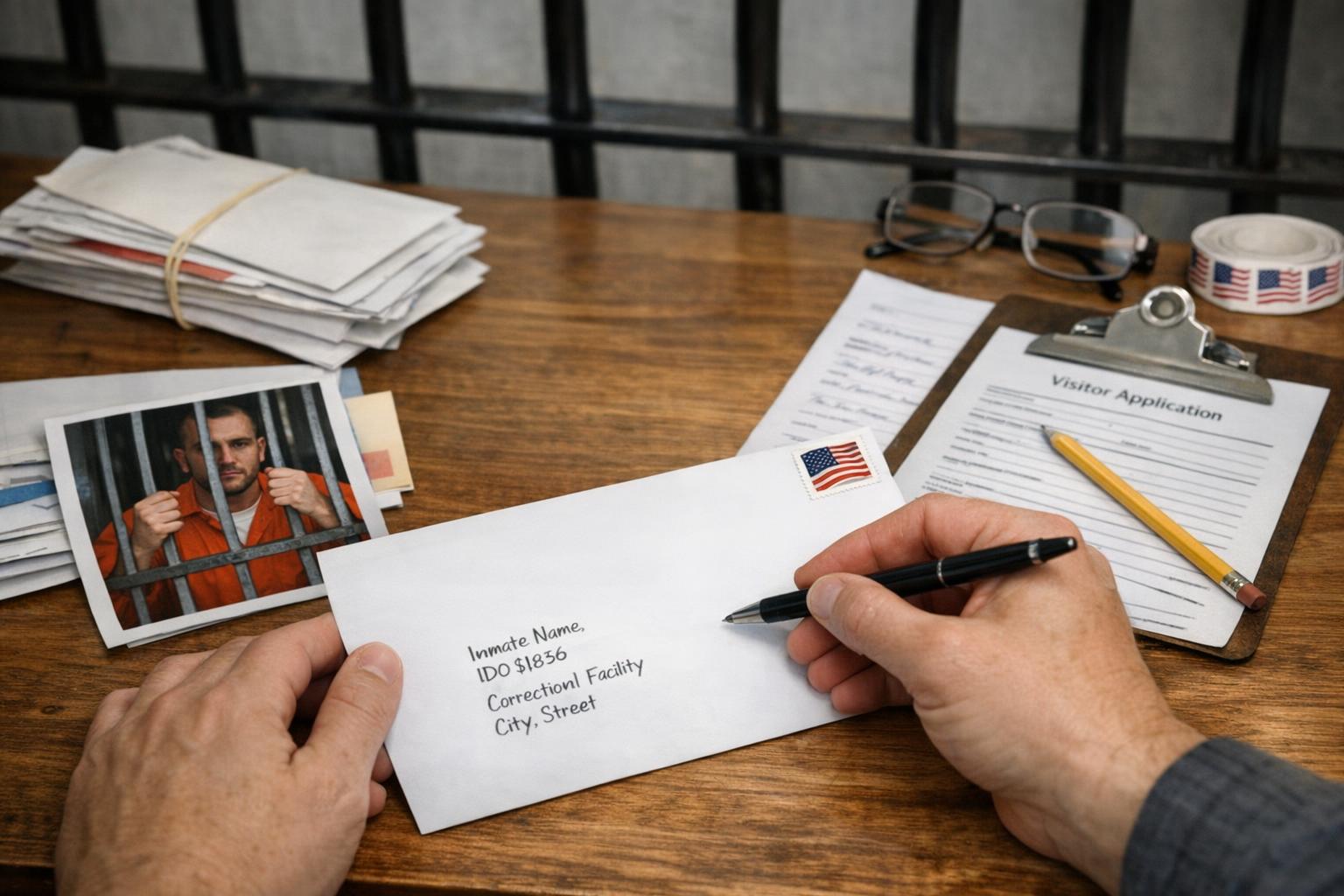
This is where most mistakes happen. Start by getting the inmate’s full booking name exactly as the facility records it. Nicknames and shortened names can cause a letter to be rejected. Next, copy the facility’s official address and the inmate’s ID number as written on the detention paperwork. Put those three things in clear, legible handwriting or a typed address block. When addressing mail to an inmate you need to include the specific unit or housing designation if provided. Facilities receive hundreds of pieces of mail each day. A correct format makes sorting faster and reduces returned correspondence.
### Know The Difference Between Facility Types
There’s a practical gap between sending mail to a county jail, a state prison, and a federal institution. County jails often hold people for short stays and can have different rules about what’s allowed in an envelope. State prisons are more uniform but still vary by state. Federal facilities follow separate policies. If you don’t confirm the facility type and its rules, you’ll waste time and postage. Ask the caseworker or check the facility’s website first.
#### Why Facility Rules Matter
Rules cover things like how many photos are allowed, whether you can include a newspaper clipping, and whether you must use white envelopes. Some prisons screen incoming mail by hand, others through a third-party vendor that scans and sends digital copies. Knowing which system the prison uses changes how you prepare the envelope.
### Inmate Mail Basics You Should Learn Fast
Learning inmate mail basics saves grief. Most facilities require a full name, an ID number, and the mailing address in a precise order. Write the return address exactly as the facility asks. Some jails reject envelopes if the return address is missing or incomplete. Also, don’t assume you can put anything small into an envelope. Staples, paperclips, and perfume can trigger a rejection.
## What Goes In And What Stays Out
There are common items families assume are safe but aren’t. You can usually send letters, photographs, and some reading materials. Cash and checks are almost always prohibited inside an envelope. If you want to send money, use the facility’s approved deposit methods. Sending cash will get the mail returned or destroyed.
### Allowed Items Versus Prohibited Items
Allowed: plain paper letters, up to a certain number of standard 4×6 photos, and sometimes paperback books ordered directly from approved vendors.
Not Allowed: Polaroids, explicit images, items with adhesive backing, stamps, sticky notes, or anything containing contraband like metal pieces or drugs. Mail containing lipstick, food residue, or glitter often gets rejected. People try to send birthday cake mixes or candy; that’s not allowed.
#### Reading Material Rules
If you plan to send books or magazines, check whether the facility requires them to come directly from an approved retailer. Many institutions will not accept packages from individuals. That means if you buy a paperback and mail it yourself, it might be returned. Ordering from legitimate vendors like Amazon with the facility’s address and the inmate’s ID in the shipping label often works better.
## Formatting The Envelope Correctly
How you format the envelope matters more than most people realize. A clear layout saves staff time and prevents mistakes.
– Top left: Your return address exactly as the facility requires it.
– Center: Inmate’s full booking name.
– Below the name: Inmate ID number, often called an offender number or booking number.
– Bottom: Facility name and full mailing address, including unit or housing if given.
Avoid decorative pens and stickers. Use black or blue ink. Typed labels are fine. Do not write anything on the back of the envelope except for a clean seal.
### Examples That Work
– Correct: Johnathan M. Doe, ID #123456, Housing Unit B-2, State Correctional Institution, 123 Prison Road, City, State, ZIP.
– Wrong: Johnny Doe, 123, 123 Prison Rd, City.
If the facility has a specific form to attach, use it. If they ask for a particular phrase in the address field such as “Inmate Mail” include it exactly. Small deviations lead to returns.
## Filling Out The Return Address And Contact Info
Some facilities require the return address to match the person sending the mail on a pre-approved visitor list. Others want the sender’s physical address rather than a P.O. Box. If your address isn’t on file with the facility or with an approved list, the inmate may be blocked from getting the letter even if the envelope arrives.
### What To Put And Why
Write your full legal name. Avoid initials. Provide a complete street address. Use the same contact details you gave when you became a visitor or when you set up an account for deposit. If you want the inmate to be able to reply, make sure your return address matches your contact on their approved list.
#### When The Return Address Must Match
If the facility requires matching addresses, a mismatch means the letter can be quarantined or destroyed. It’s a petty policy but common. Double-check before you send anything, especially if your family address has changed since the inmate was booked.
## Handling Photographs And Keepsakes
Pictures are the most commonly requested item. But prisons are strict. Most permit small, non-explicit photos and limit the amount. Group or scene shots are usually safer than suggestive or overly personal images.
### How To Prepare Photos
Print photos on standard paper without adhesive backs. Avoid writing on the image. If you write a message, put it on a separate note. Photos with visible writing in the margins or with stickers tend to get pulled. If you send small keepsakes like a religious card, expect them to be opened, inspected, and sometimes returned.
## Using Electronic Messaging And Third-Party Services
Many facilities now use third-party vendors to process mail and accept electronic messages. That changes the game. You pay online; the vendor scans the message and sends a digital copy to the inmate. It’s faster but less personal. Physical letters still matter, though they may go through the same scanning process.
### Costs, Timing, And Privacy Tradeoffs
Electronic options often cost per message or per scan page. If the facility uses a vendor, a paper letter might be converted to a PDF and then printed for the inmate. That preserves content but loses things like the texture of a hand-written note. Also, know that staff or vendor employees will see the content during scanning. Don’t include legal mail or privileged communications unless you follow the specific legal-mail procedures.
## What To Do When Mail Is Returned Or Rejected
A returned envelope usually has a reason noted. Read it carefully. Common reasons include wrong ID number, incorrect housing unit, prohibited content, or a lack of return address. If the mail is rejected without explanation, call the facility’s mailroom or the vendor’s customer service. Keep a record of what you sent and when.
### Escalating A Problem
If you believe your mail was wrongfully withheld, document everything. Keep copies or scans of what you sent, save the returned envelope, and ask for a written explanation. In many cases, a polite but firm inquiry resolves the issue. If not, contact the inmate’s case manager or an outside legal advocate who understands prison mail policy.
## Tips For Maintaining Connection Over Time
Be consistent. A one-page letter every week beats a long, infrequent letter. Short notes with specific details help the inmate remember normal life—what’s growing in the garden, what the kids did at school, a joke you both like. Avoid writing things that could cause trouble, like discussing criminal activity or putting your own safety at risk.
### Practical Habits That Make Mail Work
– Keep an envelope and stamps in your desk with a sticky note template of the address.
– Maintain a small journal of what you’ve sent and the dates.
– If the facility uses electronic mail, set reminders for payments and messages.
Following inmate mail basics in a steady way reduces error and builds trust. It’s not glamorous, but it keeps lines open.
## Dealing With Sensitive Or Legal Correspondence
Legal mail often has special handling. To protect attorney-client privilege, facilities have rules that differ from regular mail. Usually, legal mail must be clearly marked and sometimes handed to staff directly. If you’re sending legal documents, check the legal-mail procedures and use certified mail or an attorney as the sender.
### What Counts As Legal Mail
Documents from an attorney, court documents, and certain official paperwork qualify. If you send something that looks like legal mail but isn’t, it could be treated differently and lose confidentiality. When in doubt, ask the facility’s records or legal department.
## Common Mistakes Families Make
People try to be creative—colorful envelopes, glued-in items, or folded money tucked inside. That creativity gets things returned. Another common mistake is trusting secondhand information. Rules change. What worked last year might not work today. Call the facility or check their official site before you send anything.
One last practical note: when in doubt, ask the mailroom. They will tell you exactly how to address mail to an inmate and what to avoid. It’s not exciting, but it saves heartache and postage. Plus, it means your letter arrives and the person you care about opens it. Oh, and double-check the spelling on the name; I once watched a package sent to “John Smiths” get flagged—such a simple mistake. Recieve this advice and use it.



Leave a Reply