
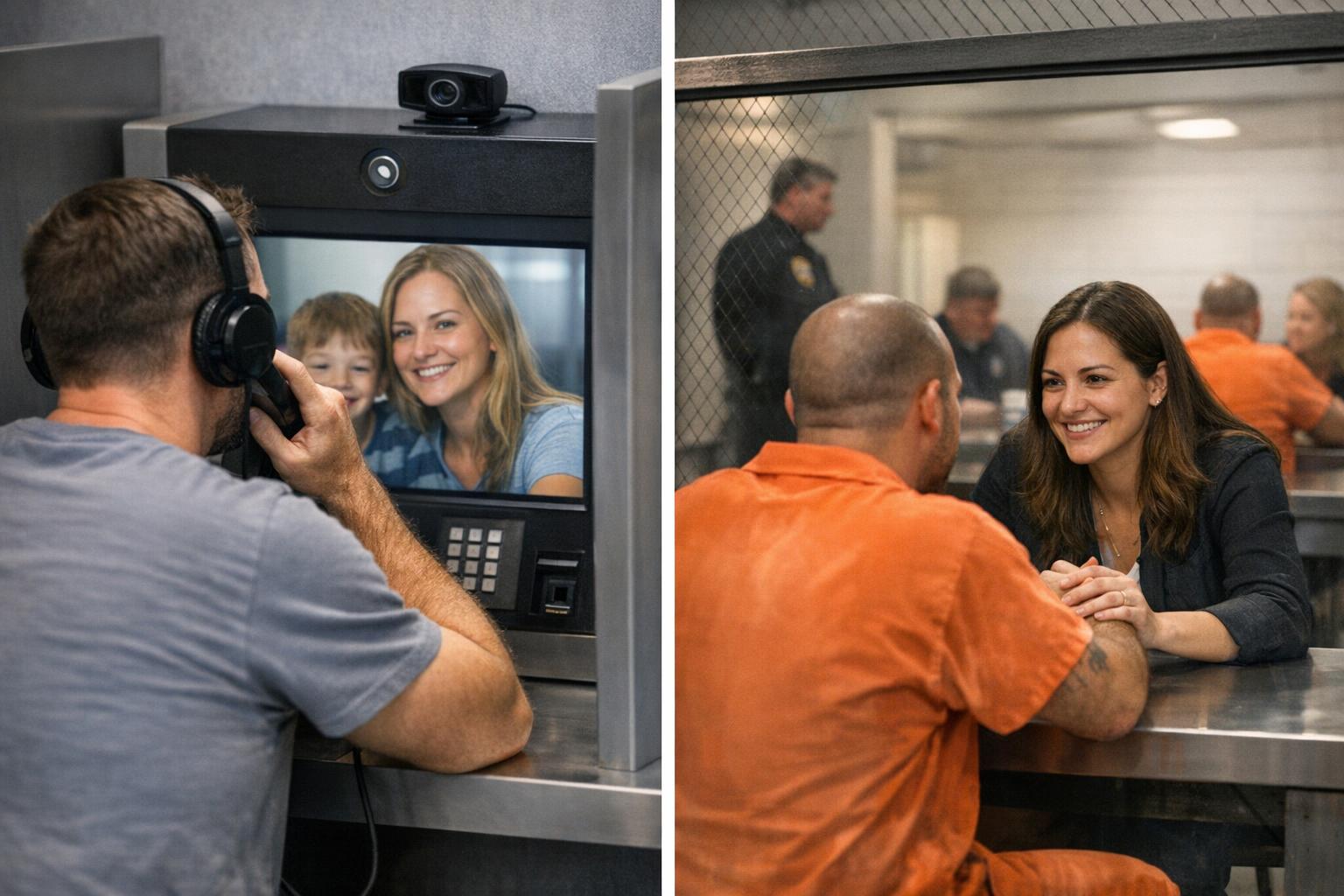
## Video Visitation Vs In-Person Visitation Pros And Cons: A Practical Look
Most facilities now offer both options, and families are left juggling trade-offs. The basic fork in the road is obvious: stay home and connect through a screen, or travel, wait, and sit face-to-face. But the difference is more than distance. Below I break down what matters in real life — not just policy-speak — so you can weigh video visitation vs in-person visitation pros and cons with a clear sense of the costs and benefits.
### Who Gains The Most From Each Option
#### Family Members With Tight Schedules
For someone working multiple jobs or juggling school and kids, video visitation is a game changer. You can log in from a break room or the kitchen, and the visit can happen on a 20-minute slot without the two-hour round trip. That convenience often translates into more frequent contact.
#### Children And Emotional Needs
Kids usually do better with in person visitation. A hug, a single look, the ability to hand over a drawing — those things matter. Video visitation helps maintain contact when distance or illness makes visits impossible, but it’s not a perfect substitute for the tactile and emotional aspects of face-to-face time.
#### The Inmate’s Perspective
For people inside, video visitation can reduce waits in loud, crowded visiting rooms. It’s often controlled, shorter, and less stressful if the alternative is a long day of processing and searches. But inmates also report that in person visitation feels more “real” and can make a difference in morale, especially during important family events.
### Cost, Fees, And Who Pays
#### Direct Financial Costs
This is where the debate gets heated. Many jails charge for video visitation sessions and for the technology that facilitates them. Families on a tight budget may end up paying more in accumulated session fees than they would in gas for a single monthly trip. On the flip side, in person visitation often requires travel, lodging, or time off work.
#### Hidden Costs
Time is money. A six-hour visit day when you have to take unpaid leave can be draining. Video sessions can be squeezed between shifts. But poor internet, dropped calls, or extra fees for longer sessions add up. Some people prefer to avoid those surprises and accept the one-time travel cost.
### Security, Privacy, And Recordkeeping
#### How Each Option Handles Safety
In person visitation is heavy on physical security: body scans, searches, and monitored meeting rooms. That provides a sense of safety for staff and families. Video systems shift some security concerns to digital tracking and recording. Many facilities record sessions for security purposes, which can be a privacy issue if you weren’t expecting it.
#### Data And Surveillance
Video visitation platforms store recordings and logs. Who has access? How long are recordings kept? These are important questions. Families should assume that anything said on a monitored platform might be archived. That changes the tone of conversations and can affect reentry plans, legal matters, or family dynamics.
### Practical Issues: Scheduling, Technology, And Accessibility
#### Scheduling Flexibility
Video visitation systems can offer more scheduling windows, including evenings. That flexibility is a real advantage if your life doesn’t match the facility’s visiting hours. But if the platform’s slots are frequently fully booked, that flexibility is theoretical, not practical.
#### Tech Problems And Accessibility
Not everyone has a reliable device or high-speed internet. Older relatives, low-income households, or rural families can struggle with the tech side of video visitation. For those people, in person visitation — even if it’s a longer trip — can be the more reliable option.
#### Disability And Special Needs
Some facilities are better set up for visitors with disabilities than others. Video visitation can be accessible in ways that physical spaces are not, but that’s only true if the software is compliant with accessibility standards. Otherwise, in person visitation that accommodates wheelchairs or interpreters may be necessary.
### Emotional Quality Of The Visit
#### Presence Versus Interaction
In person visitation brings nonverbal cues forward: subtle shifts in body language, the warmth in a handshake, the silence after bad news. Those are powerful. Video visitation reduces that richness. People often underestimate how much is lost in a video frame.
#### Managing Hard Conversations
If you need to tackle difficult topics — family finances, housing plans, mental health — most people do those better in person. Technology can create a sense of distance that makes serious talk feel sterile. On the other hand, short, routine check-ins may be better suited to video visitation.
### Institutional Impacts And Behavior
#### Facility Staffing And Costs
Facilities sometimes promote video visitation because it reduces the need for staff in visiting halls, cutting costs. That can mean fewer choke points for contraband, and fewer fights. But it also reduces face-to-face supervision that can be important for conflict de-escalation and family support services.
#### Visitation Policy And Rehabilitation
Regular, meaningful contact with family supports rehabilitation. If a facility replaces most in person visitation with recorded and fee-based video sessions, the quality of contact may decline. Programs that combine both — scheduled in-person family days plus low-cost video check-ins — tend to work better for long-term outcomes.
### Legal And Compliance Considerations
#### Attorney Visits
Legal visits generally have different rules. Confidentiality is a must. Many facilities still require in person attorney-client visits under secure conditions, though secure video can be permitted with specific safeguards. If you have a pending legal matter, rely on the facility’s policy and insist on a private meeting when necessary.
#### Policy Changes And Advocacy
Family members and advocates have pushed back against for-profit models that monetize family contact. Some jurisdictions have capped fees or required free video sessions for certain cases. Knowing local policy can shift the cost-benefit calculation between video visitation vs in-person visitation pros and cons.
### When A Mixed Strategy Works Best
#### Combine Frequency With Quality
One practical approach is to use video visitation for quick, frequent check-ins and reserve in person visitation for milestones: birthdays, graduations, or critical family meetings. That way you keep connection regular while preserving the power of face-to-face time.
#### Plan Around Limitations
If your town is three hours away, schedule an extended in person visit every few months and use video calls for day-to-day contact. If you have a toddler who needs a parent’s physical presence for stability, prioritize in person visits even if they’re rarer.
### The Social And Cultural Layer
#### Stigma And Visiting Norms
In some communities, showing up in person is part of social expectation. Not being there can be misinterpreted as abandonment. Video visitation can feel like an inadequate substitute and may carry social stigma inside the facility. Families should be aware of local norms.
#### Maintaining Rituals
Simple rituals — bringing a homemade sandwich, reading a bedtime story in person — don’t translate well over video. Those rituals matter for identity and memory. If those things are important to you, prioritize in person visitation when possible.
### Practical Tips For Better Visits
#### Prepare For Either Format
For video visitation, check your connection, charge your device, and pick a quiet place. For in person visitation, bring snacks, arrive early, and know the ID and paperwork requirements. Have a backup plan in both cases; delays and cancellations happen.
#### Know The Rules
Read the facility’s visitation rules before you go online or drive in. Some places limit physical contact, others prohibit certain clothing. Knowing the rules prevents surprises and stressful refusals at the gate.
#### Keep Records
If you’re using video visitation frequently, keep a simple log: dates, times, duration, and any fees. That helps track patterns, build a case if fees are excessive, and provides emotional recordkeeping during long separations.
A final note: the choice between video visitation vs in-person visitation pros and cons isn’t binary. Each option brings real advantages and real costs. It comes down to what matters most in your situation — immediacy and frequency, or depth and presence — and which trade-offs you can live with. The right mix usually looks different for every family, so expect to adjust as circumstances change and as policies evolve. Be patient with the process, push back when fees or access seem unfair, and keep showing up in whatever way works best for your loved ones. Seperate small steps can add up over time.



Leave a Reply