
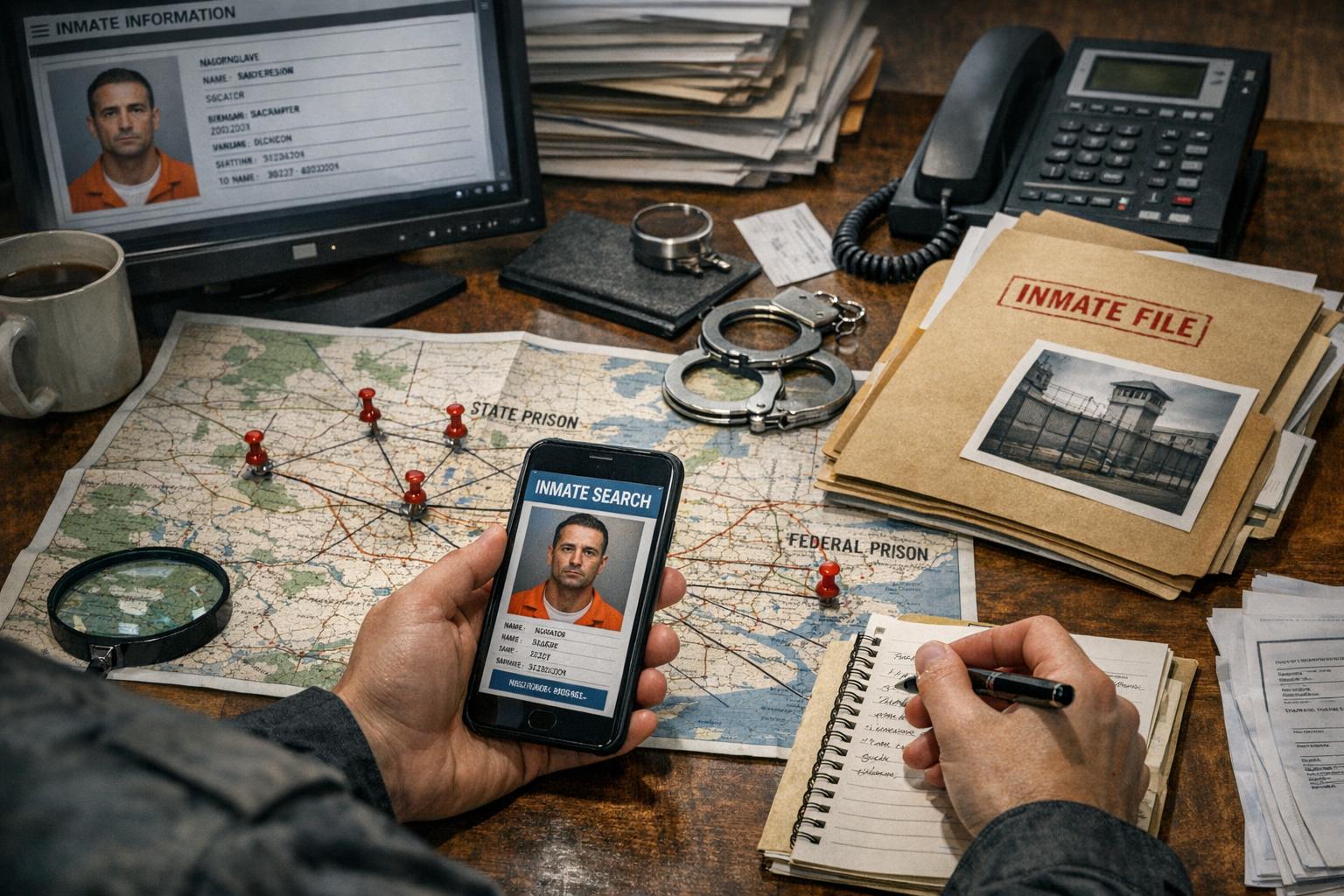
The secrets the system didn’t want you to know are out — a dizzying maze of records, dead ends, and buried databases. One moment you’re desperate, the next you’re face-to-face with cold bureaucracy. Learn the ugly truth and the exact steps that actually work to get answers fast.
## How To Find Which Prison An Inmate Is In
The phrase people whisper in desperation: how to find which prison an inmate is in. It sounds simple. It isn’t. Across county jails, state penitentiaries, federal lockups and private prisons, records are scattered like bones after a storm. Yet there are consistent, repeatable methods — the real “prison lookup” playbook — that cut through the fog.
### Why Finding An Inmate Feels Impossible
Every agency uses different systems, formats, and levels of transparency. Some counties publish searchable databases. Some states offer sleek online inmate locators. Others require phone calls, paperwork, or even showing up in person. When you don’t know where to begin, the search becomes a rabbit hole. The most sensational truth: human error and outdated records hide more inmates than you’d expect.
#### The Types Of Facilities You’ll Encounter
Federal Prisons, State Prisons, County Jails, Immigration Detention Centers, And Private Prisons — each has its own record-keeping rules, visitation protocols, and search interfaces. Knowing the type of facility narrows the field dramatically for any prison lookup attempt.
#### Red Flags And Privacy Barriers
Some agencies redact details for safety. Others remove names from public portals if requested. If someone is under witness protection, juvenile, or subject to sealed records, legal avenues must be pursued. Learn the signs so you don’t waste time.
### The Shockingly Simple First Steps
Before diving into databases, prepare. Collect the inmate’s full legal name, aliases, date of birth, race, and last known arrest location. These seemingly minor details are often the key to unlocking a stubborn record.
### Supported Tools For Prison Lookup And Inmate Location
There are three main categories of tools that deliver results: official government portals, third-party aggregators, and direct contact with detention facilities. Use them in sequence: official portals first, then verified third-party services, and finally phone or in-person confirmation if necessary. This order minimizes misinformation and preserves legal accuracy when you need to act fast.
## Step-By-Step Remedy: How To Find Which Prison An Inmate Is In
This section presents a formal, practical method to obtain an inmate location. Treat it like a procedure in a legal office: methodical, careful, verifiable.
Required Materials (Ingredients)
– A computer or smartphone with internet access
– The inmate’s full legal name, known aliases, and date of birth
– Approximate arrest date and county or city of arrest (if known)
– Notepad or document for recording ID numbers and contact info
– Telephone (for follow-up calls) and a pen for notes
– Optional: A printout or digital copy of any arrest paperwork or bail records
Step-By-Step Procedure
1. Confirm Identity: Verify the inmate’s full legal name and date of birth. Even small spelling differences break searches.
2. Search State Department Of Corrections: Visit the state Department Of Corrections website for the state where the arrest occurred. Use their inmate search or offender locator. Enter the full name and DOB. Record any offender ID numbers and facility names. This is the most authoritative source for state-run institutions.
3. Use Federal Resources: If you suspect a federal case, go to the Federal Bureau Of Prisons inmate locator and search by name or register number. Federal facilities will show custody status, location, and projected release if available.
4. Check County Jail Rosters: If the arrest was local, look up the county sheriff’s office or city jail roster online. Many county systems list recent bookings and transfers.
5. Try Aggregator Services Carefully: Use reputable inmate search aggregators as cross-references. These can speed up the search but may contain outdated or paywalled information. Verify anything you find here against official sites.
6. Confirm The Inmate Location: Call the facility where the inmate appears to be housed. Provide full name and DOB and request inmate location and visitation rules. Write down the contact person, date, and time of the call.
7. Document Everything: Keep a log of searches, results, and screenshots. If the person has been transferred, the record trail often includes transfer dates and receiving institutions.
8. Escalate If Necessary: If records are sealed or missing, seek legal counsel or contact the court clerk in the county of arrest for docket information. Court records can reveal where an inmate was sent after sentencing.
9. Maintain Legal And Ethical Boundaries: Do not use false pretenses to obtain information. Respect privacy laws and facility rules when requesting or using inmate location data.
### Examples Of What You’ll See In Records
Most official entries include: Inmate Name, ID Number, Facility Name, Unit/Block, Housing Assignment, Custody Status, Booking Date, Projected Release, And Court Case Number. Learn to read these fields so you’re not misled by abbreviations or clerical errors.
### How To Interpret Conflicting Information
When two sources disagree — say, a county roster lists someone as transferred but the state DOC shows a different facility — prioritize the most recent timestamp and the official state or federal database. Aggregators and news reports can lag by days or weeks.
### Advanced Tactics For Stubborn Cases
If conventional searches fail, subpoenaed records or contacting defense counsel may be the only way to get accurate inmate location data. Investigative-grade approaches include checking court filings, parole documentation, and even bail bond company records. These methods require legal understanding; consider hiring an attorney if the stakes are high.
#### When To Use A Prison Lookup Service
Paid prison lookup services can expedite results when time matters and you’ve already tried official channels. Use them as a last resort and always verify any information they provide against government sources. These services are useful for cross-referencing multiple jurisdictions quickly, especially in interstate cases.
### Extra Precautions And Legal Considerations
Do not publish private inmate location details in a way that could endanger the inmate or others. Sharing sensitive data can have legal consequences. If the inmate is a juvenile or under protective custody, adopt additional privacy protections and consult legal counsel.
### Quick Checklist For An Efficient Search
– Gather full legal identifiers first.
– Start with state DOC and federal BOP portals.
– Check county sheriff rosters and court dockets.
– Verify aggregators against official sources.
– Call the facility for live confirmation.
– Document every step for legal clarity.
#### Handling Emotional And Practical Fallout
Finding an inmate can unleash a tidal wave of emotions — relief, rage, despair. While this guide is sensational in tone, the remedy above is deliberately formal: document everything, follow official channels, and consult lawyers when privacy or legal obstacles arise.
### Common Mistakes That Destroy Searches
– Searching only by nickname or partial name.
– Ignoring the possibility of transfers between jurisdictions.
– Trusting third-party results without verification.
– Failing to note offender ID numbers that uniquely identify records.
## The One-Time Emergency Protocol For Immediate Inmate Location
If someone’s safety is at risk and you absolutely must locate them now, combine an all-hands search: call police dispatch in the arrest jurisdiction, check the county jail roster, use the state DOC locator, and, if federal, query the Bureau Of Prisons. Keep a legal representative in the loop — some cases require immediate court filings to compel disclosure.
### Final Practical Tips For Ongoing Monitoring
Set up alerts where possible on state DOC pages, keep a case file with screenshots and reference numbers, and establish a direct line to facility administrators for updates. Persistence and documentation are your most powerful tools in any prison lookup or inmate location effort.
The bureaucracy is designed to confuse and delay — but armed with the right steps and those exact materials listed above, you can find answers and act decisively.





Leave a Reply