
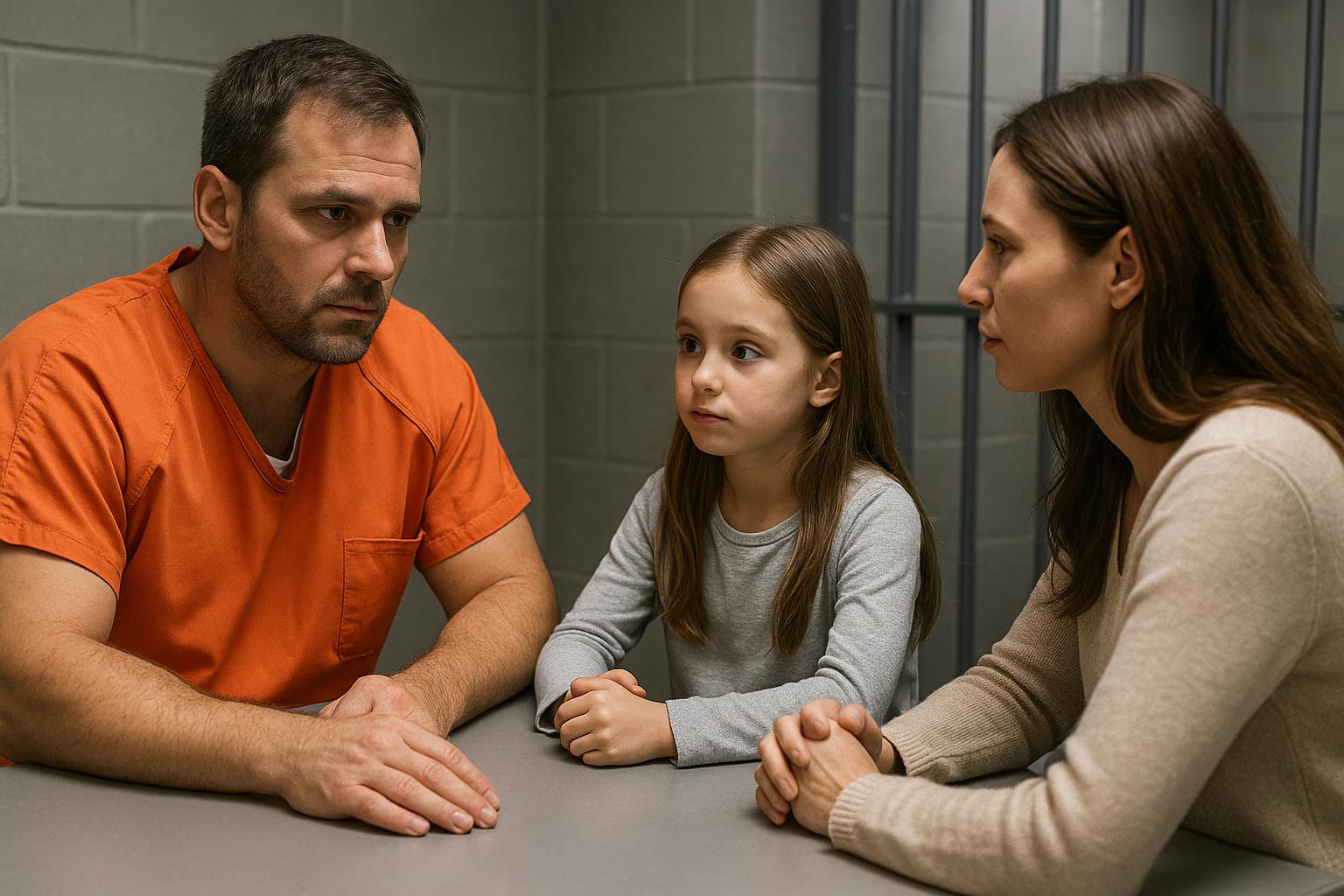
Kids notice more than adults think. A glance, a silence, the way a parent avoids answering the phone — those small cues raise questions fast. If your family is arranging prison visits, you’ll be asked to explain what’s happening, sometimes before you’re ready. Talking matters. The way you shape the visit in a child’s mind affects their anxiety, their memories, and how they see the person behind bars.
## How To Talk To Kids About Prison Visits: Practical Steps
When you plan how to talk to kids about prison visits, think small and concrete. Kids don’t need a lecture. They need a map: who, what, where, when, and how it will feel.
### Start With What They Can Understand
A five-year-old and a fifteen-year-old need different amounts of detail. For little kids, keep it factual and short. “We’re going to visit Aunt Maria at a place where she can’t leave right now. There will be guards, a metal detector, and a room where you’ll sit. You’ll be able to see her.” That’s enough.
Older kids need more. Explain why the person is there in age-appropriate terms. If the truth is complicated, focus on behavior and consequences rather than crime details they don’t need. Teenagers can handle more about the legal system, but be ready for anger, questions about fairness, and worries about safety.
### Use Concrete Descriptions
Tell them the logistics: what the building looks like, the checks at the entrance, the rules about hugging or touching, and whether the visit will be through glass or face-to-face. Concrete details reduce the imagination’s worst-case scenarios. Show photos of the visitation room from the facility website if possible. If you’ve been there, describe the furniture, the sounds, what people wear.
### Give Reassuring Timelines
Kids are comforted by predictability. Say how long the visit will last, when you’ll arrive, and the sequence of events. “We’ll check in, wait in the lobby, walk through a doorway where a guard will ask our names, then go to a table to sit with Dad. After thirty minutes, we’ll leave and get ice cream.” Small anchors make a big difference.
## Preparing For The First Visit
First visits are mostly about managing expectations. Logistics matter, but so does emotional prep.
### Walk Through Practicalities
Teach kids about identification, dress codes, permitted items, and the possibility of delays. Explain that phones, backpacks, and sometimes food aren’t allowed. If you expect searches or a metal detector, say so plainly. For example: “We’ll put your jacket on a tray and it will go through a machine. It’s normal. It won’t hurt.”
If the facility requires parent authorization for child visitation, get that done early. Bring any paperwork, birth certificates, or custody documents the facility asks for. Nothing spikes anxiety like paperwork problems at the gate.
#### What To Pack And What To Leave Home
Pack a small comfort item: a favorite drawing, a small, approved toy, or a photo. Many facilities limit what kids can bring, so check rules ahead. Don’t promise snacks unless the facility allows them. Bring water for the car and a change of clothes for smaller children if the wait will be long.
#### Traveling And Timing
If travel is long, plan breaks before and after the visit. A neutral stop like a playground or café can separate the emotional high of the visit from the drive home. For younger kids, plan nap time and dress them comfortably so the experience is less about irritability and more about connection.
### Role-Play The Visit
Children respond well to rehearsal. Role-play entrance procedures, greeting the person, and what they can say. For example, practice a simple script: “Hi, Dad. I drew you a picture. I like our dogs. Will you read this with me?” Role-play helps kids focus on the human side of the visit, not the institutional side.
## How To Talk To Kids About Prison Visits When Visits Aren’t Possible
Visits may be restricted or not possible right now. That doesn’t mean connection has to stop, but you’ll need different language.
### Explain Reasons Plainly
Tell kids why a visit is postponed or denied: the facility might be closed to visitors right now, or the person might be in a different part of the system. Avoid vague statements like “they’re busy.” Those invite magical thinking. Say, “Right now the rules don’t let visitors in, but we can call or send letters instead.”
### Create Alternatives
Set up a routine for phone calls, video sessions, or letter writing. Explain how those will work: “On Wednesdays after dinner we’ll call. We’ll sit together and you can bring a drawing.” Teach kids to hold the phone steady, to speak clearly, and to expect delays or bad connections.
## Managing Emotions And Reactions
Visits bring up a messy mix of feelings for kids: excitement, confusion, shame, relief, fear. Your role is to validate and coach through those emotions.
### Normalize Strong Feelings
Be explicit about emotions. “It’s okay to feel mad or sad after a visit. It’s normal to cry or laugh.” Labeling feelings helps kids name what they feel instead of acting them out. Keep an eye out for behavior changes after visits: regression, nightmares, clinginess, or acting out. Those are signals to address, not punish.
### Avoid Over-Reassurance
Phrases like “It’ll be fine” or “Don’t worry” can feel dismissive. Instead, acknowledge the feeling and offer a practical response: “I see you’re worried. It’s because visiting was different than you expected. Let’s sit and talk about what surprised you.”
#### Safety Talk Without Scare
If the child worries about safety — “Will someone hurt us?” — be honest: “Most people who work there are doing a job. You might see people who look angry or tired. That can be scary, but the rules are there to keep everyone safe.” Anchoring to rules and routines reduces fear.
## Scripts And Phrases That Work
Prepare short, simple scripts for moments of high emotion. You’ll be the steady voice when kids are fragile.
– Before the visit: “We’re going to sit with Grandpa for thirty minutes. We’ll say hello, maybe draw together, and then we’ll go home.”
– If a child sees something upsetting: “I see this is upsetting. Do you want to sit with me? We can step away and take deep breaths.”
– If a child asks about the reason for incarceration: “He made a choice that led to this. That doesn’t mean he doesn’t love you.”
Those scripts are scaffolding. Use them, then follow up with a quick check: “Does that make sense? Do you want to say something different?”
## What To Say About The Person Incarcerated
Kids balance two images: the person they love and the reality of incarceration. Help them hold both.
### Don’t Demonize, Don’t Exonerate
You can acknowledge harm without turning the parent into a villain. Say, “He did something that hurt people and that has consequences. He also loves you and wants to see you.” This avoids extremes and keeps the emotional connection intact.
### Be Honest About Limits
If an incarcerated parent cannot have unsupervised contact or if certain conversations are off-limits, say so. “Right now, the rules say you can talk only when a guard is in the room or on the phone. That doesn’t mean they don’t care.” Boundaries are confusing to kids; clarity helps.
## Handling Stigma And Questions From Others
Kids will encounter peers who ask blunt or cruel things. Give them short comebacks that preserve dignity.
### Quick Scripts For Kids To Use
Teach lines tailored to the child’s comfort level: “My family is different, but that’s okay,” or “That’s private.” Empower them to change the subject: “Let’s talk about school instead.”
### Coach Adults Around The Child
Caretakers, teachers, and grandparents should know what information is shared. Decide together what details the child wants others to know. Some kids prefer a simple explanation like “My dad lives somewhere else” instead of a fuller story.
## Special Considerations By Age And Need
Different developmental stages require different approaches.
### Toddlers And Preschoolers
Keep explanations simple and frequent. Use play to process the visit. After a visit, play out the scene with dolls or toys. Look for signs of separation anxiety or sleep disruption. Reassure often.
### School-Aged Children
They benefit from more context and practical planning. Give them roles: pack the drawing, hold the ticket, ask a prepared question. That sense of agency calms anxiety.
### Adolescents
Teens may resist talking. Ask open-ended questions and listen more than lecture. They might want to speak directly with the incarcerated parent about adult matters; set boundaries based on custody and legal guidance, but respect their need to connect.
### Children With Special Needs
Adjust explanations to match processing and sensory profiles. If your child has autism, describe sensory experiences in detail. If they are anxious, shorter visits or private rooms might work better. Advocate with the facility to accommodate disabilities.
## Practical Tips For The Visit Day
Small choices shape the entire experience.
### Arrive Early And Bring Comfort
Give yourself time for lines and security. Bring a comfort object and plan a calming activity for waiting times. Consider a quiet game or a small book that keeps hands busy.
### Keep The Focus On Connection
Encourage simple, shared activities allowed by the facility: reading a book together, playing a simple hand game, or drawing. Avoid making the visit a time for heavy adult conversations. Kids need presence, not logistics.
### Watch Nonverbal Cues
Children may freeze, stare, or withdraw. Notice body language: Is the child holding back tears? Clinging? If they seem overwhelmed, suggest a short break or a quiet activity. It’s fine to end the visit early if it’s too much.
## When Things Go Wrong During The Visit
Not every visit will go smoothly. People argue, someone may cry, guards may interrupt. Have a plan.
### Step Back And Resolve Later
If an adult conversation becomes heated, protect the child by stepping aside. Say, “We’ll talk about this later.” Children don’t need to witness adult conflict. If tensions spike with the incarcerated person, maintain neutral wording: “We can’t fix this right now. Let’s focus on how the kids are doing.”
### Use The Post-Visit Window
The drive home is a critical time. Kids often decompress then. Ask gentle questions and validate their feelings. Avoid interrogating. “What was the best part? What made you uncomfortable?” gives them control.
## Legal And Custody Questions Around Child Visitation
Child visitation policies vary by facility. Know your rights and paperwork.
### Know The Rules Ahead Of Time
Most facilities publish visitation policies online. Read them. Learn about approved visitors, necessary documentation, and any background checks. If the incarcerated person is not the legal parent, be clear about who can legally bring the child.
### Work With Legal Advocates If Needed
If visitation rights are being blocked unfairly, legal aid groups or family organizations can help. Document communications and keep copies of written permissions, custody orders, and identification.
## Building A Routine Around Visits
Predictability reduces anxiety. Build rituals that begin before and end after each visit.
### Pre-Visit Rituals
A short playlist, a special snack beforehand, or a ritual phrase can signal safety. “We always stop for a hug before we go in.” Rituals anchor children.
### Post-Visit Rituals
Plan something comforting afterward: a drive-through treat, a favorite movie, or a quiet walk. Discuss feelings in short bursts and revisit them over several days. Let the child lead the depth of conversation.
## Supporting The Caregiver Who Talks To The Child
The person explaining visits to kids needs support too. It’s okay to ask for help.
### Share The Load
If possible, share explanations with another trusted adult so it’s not all on one person. Train grandparents, teachers, and counselors on how to respond. This creates a consistent message and reduces the emotional labor on one caregiver.
### Take Care Of Your Own Feelings
You’ll be the emotional thermostat for the child. Manage your stress beforehand: breathe, practice what you’ll say, and take breaks. If you need a counselor or a support group, seek one. There’s no shame in needing help.
## How To Keep The Relationship Healthy Over Time
Visits won’t fix everything, but regular, thought-out interactions help kids remember the relationship beyond the system.
### Encourage Ongoing Communication
Help the child send letters, drawings, or short voice messages. Make the process easy: keep stationery handy, set aside a 15-minute writing time after school, and talk about topics to cover.
### Focus On Small Moments
A child may not remember long speeches but they will remember a shoulder to lean on, a silly joke, a shared snack. Those small moments build continuity.
## Working With Schools And Care Providers
Schools and childcare providers are often unaware of the emotional work the child is doing.
### Inform Necessary Parties
Decide who needs to know and provide brief guidance. Teachers may need to know about missed days or emotional swings after visits. A short note requesting sensitivity can prevent disciplinary responses from being misinterpreted as defiance.
### Request Support Services
Many districts offer counseling or school-based mental health services. Don’t hesitate to use them. They can provide coping tools and a neutral adult for the child to talk to.
## When To Seek Professional Help
Some reactions need more than family support.
### Warning Signs
If a child has prolonged nightmares, severe withdrawal, persistent aggressive behavior, or talks about self-harm, seek professional help. Also seek help if the child’s school performance drops significantly.
### Types Of Help That Work
Trauma-informed therapists, play therapists for younger kids, and family counselors can be effective. Look for clinicians experienced with incarceration dynamics and child visitation issues.
A child’s experience of visiting someone in prison is not a single event. It’s a series of moments: the waiting, the greeting, the leaving, the retelling. Each moment is an opportunity to build security, tell the truth without overburdening, and keep the relationship alive in ways that matter. Keep your explanations simple, your routines predictable, and your focus on connection. And when you need help, ask for it — you don’t have to navigate this alone. Definately not.



Leave a Reply