
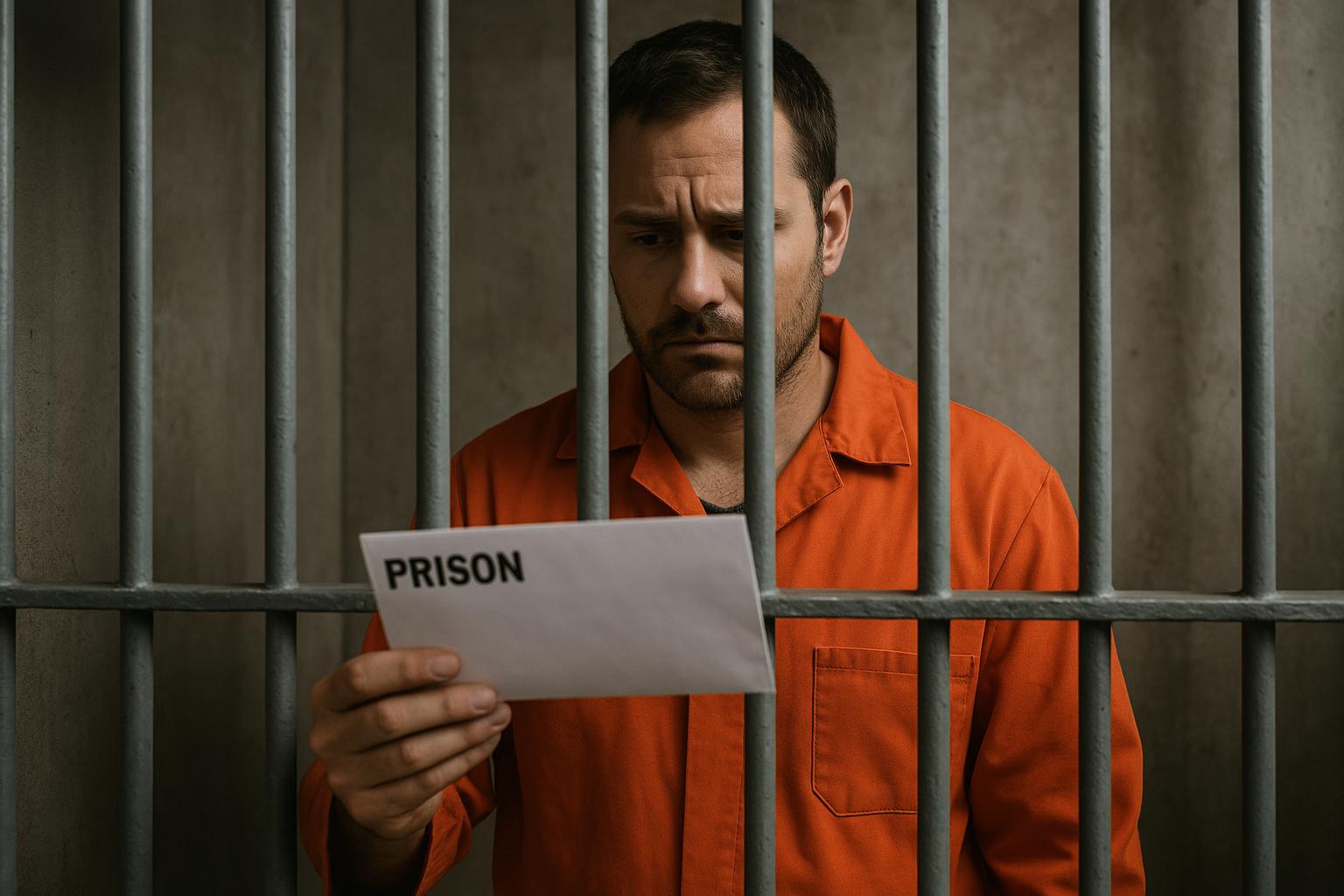
People expect a letter to show up in a few days. In reality, weeks can pass and family members are left wondering what happened. Delays happen for obvious reasons and for things that aren’t obvious at all. Knowing the likely causes makes it easier to take the right next step.
## Inmate Mail Delay Reasons: Why Some Letters Take Weeks
The phrase “inmate mail delay reasons” sounds clinical, but it covers a handful of practical issues: security screening, staffing problems, postal service slowdowns, and facility-specific rules. Each of these factors can add days or weeks. Sometimes several of them stack up.
### Security Screening And Contraband Checks
Prisons screen mail to keep contraband out. That screening can be thorough: opening every envelope, passing items through scanners, and reading correspondence for coded language. When a facility tightens checks—after an incident, for example—processing bottlenecks form quickly. That’s one of the most common inmate mail delay reasons.
### Mailroom Staffing And Processing Capacity
Small mailrooms do a lot with very few staff. If a facility is short-handed, each piece of mail takes longer to log, inspect, and distribute. Overtime is expensive, and hiring takes time. The backlog grows, and families see slowdowns that reflect internal workflows more than postal timing. These internal mail delays are often invisible to people outside the facility.
### Postal Service And External Logistics
Sometimes the hold-up isn’t inside the prison. Local or national postal service problems—holidays, weather, carrier shortages—cause mail delays long before anything hits the facility doors. If you’re sending packages from another state or a remote area, add transit time and multiple hand-offs to the list of potential snags.
### Policy Changes, Technology, And New Rules
Facilities change their rules. A new vendor might start scanning all incoming mail and delivering only printed copies, which introduces a new queue. Or a facility might switch to a different approved envelope size or require return addresses in a very specific format. Those kinds of shifts create temporary spikes in processing time and are a frequent source of mail delay reasons.
## How To Spot Which Delay Applies
You don’t need a law degree to figure out why a specific piece of mail is late. Look for clues in timing and context.
### Timeline Clues
If everything from a particular sending location is late, suspect the postal service. If only one facility has slowed down and it follows a recent incident like a lockdown, suspect stricter internal screening. If there was a holiday or major storm, external mail delays are likely.
### Communication And Notices From The Facility
Some facilities post notices about temporary changes—new vendor, delayed shipments, or quarantined mail during outbreaks. If a loved one says “everyone’s mail has been on hold,” that’s a pretty clear hint toward an institutional issue rather than an isolated piece getting lost.
### Rejected Or Returned Mail Signals
If mail is returned with a note—wrong format, disallowed content, missing return address—that explains the delay. Don’t ignore returned items; they’re a direct message from the system telling you what to fix.
## Practical Steps Loved Ones Can Take
You can’t control staffing or the weather, but you can reduce the chance your mail gets delayed for avoidable reasons.
### Prepare Mail To Meet Rules
Follow facility guidelines exactly: approved paper, no staples, correct envelope size, and full inmate identifiers. A small mismatch—one missing ID number, for instance—can push your piece into “needs review,” which slows everything down.
– Double-check the inmate’s name, ID number, facility address, and your return adress (yes, spell that), all in the places the rules specify.
– Avoid anything that could be construed as contraband: photos with metal ink, stickers, or laminated pages.
### Use Approved Channels And Formats
Some facilities accept electronic messaging that prints at the mailroom; others require paper letters. Using the approved channel can bypass delays tied to rejected formats. If the facility accepts vendor-printed mail, that can be faster—but read the fine print, because vendors sometimes remove certain pages before printing.
### Ask Questions Proactively
Call the facility’s mailroom or check the facility website for notices. Ask whether there are recent policy changes or known backlogs. If you speak to a staff member, note their name and what they tell you. That record can help if you need to escalate.
### Track, Document, Escalate
Keep copies of what you send and when. If something is missing for an unreasonable length of time, file a formal inquiry with the facility. If that doesn’t work, ask a local ombudsman, the inmate’s counselor, or a reentry organization for help. Persistence often matters.
#### What To Do When Mail Is Returned
Returned mail usually comes with a reason. Fix that issue before resending. If the return reason is vague, take a photo of the returned envelope, call the mailroom, and insist on a clear explanation. Don’t assume “lost” is the only possibility.
#### When To Shift To Electronic Options
If mail delays are chronic, ask the inmate or the facility whether secure email, kiosks, or vendor messaging are options. Those services aren’t right for everyone, but they cut out many physical choke points and reduce one major source of mail delays.
## Special Cases That Often Surprise People
Some situations don’t fit the obvious boxes, and they are worth knowing about so you don’t chase the wrong fix.
### Lockdowns And Quarantines
A lockdown means no movement for most staff and inmates. Mail can pile up and then be distributed all at once when the lockdown ends. Quarantines for health reasons have the same effect. Those are mad slow but temporary.
### Legal Mail Has Different Rules
Attorney-client mail is usually handled separately and gets priority. If a legal envelope is missing, escalate through legal channels rather than relying on normal mailroom procedures.
### Volume Spikes Around Holidays Or Events
Birthdays, holidays, and events can create high-volume spikes. If you’re sending cards around popular holidays, expect a lag. Planning early reduces the chance your mail is caught in the crush.
### Security Technology Errors
Machines misread barcodes, scanners jam, and vendor systems fail. Technology adds speed when it works, and a single failure can ripple into broader mail delays. Facilities will often post a notice when a vendor system is down, but sometimes you learn only through repeated late deliveries.
## When You Need To Escalate Beyond The Mailroom
If staff can’t or won’t give a useful answer, gather your documentation: send dates, tracking numbers if available, returned envelopes, and any messages from the facility. Contact the facility’s administration or an independent oversight office. If the inmate’s welfare depends on timely documents—legal forms, for instance—make that clear in your communication.



Leave a Reply