
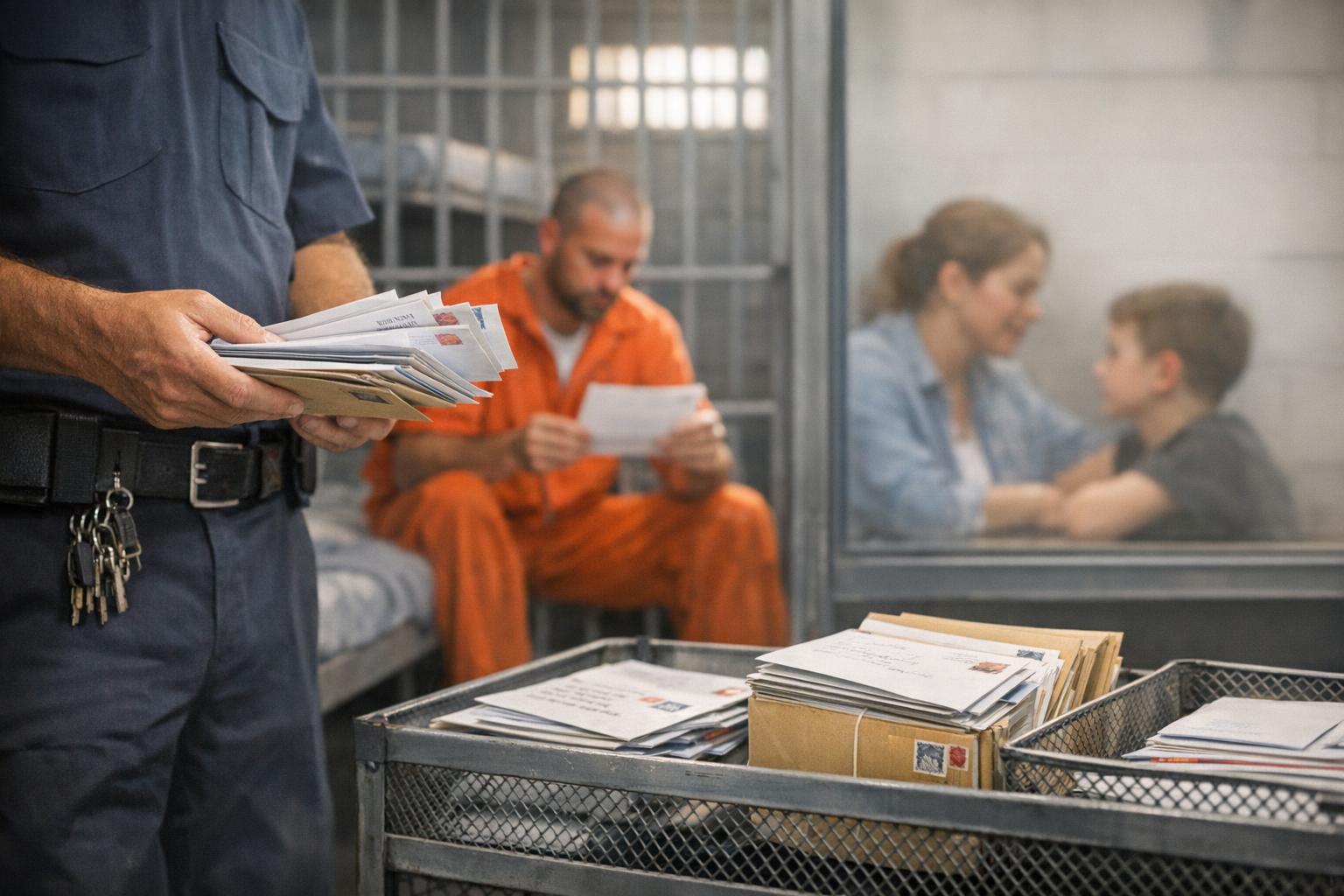
## Understanding Inmate Mail Delivery Times
Expectations matter. Families often assume a letter will arrive in a day or two, but prison systems don’t run like the post office for civilians. Inmate mail delivery times depend on the facility, the type of mail, staffing, security checks, and even the day you drop the envelope. Knowing the mechanics keeps you from panicking when a letter vanishes into a backlog.
Inmate mail delivery times are not a single number you can memorize. A county jail downtown with one guard on mail duty will process differently than a federal penitentiary with a centralized mailroom and automated scanners. The goal here is to give you a practical sense of what slows mail and what actually speeds it up.
### Why Mail Moves Slowly
Processing mail in a secure environment is mostly about removing risk. That takes time.
#### Security Checking And Scanning
Every piece of mail is potentially a vehicle for contraband. Facilities screen envelopes and packages for hidden items, drug residue, and unauthorized content. Some prisons open and photocopy every incoming page. Others X-ray packages and run dye tests on paper. Those extra steps add days.
#### Staffing And Scheduling
Mailrooms are often small and under-resourced. If the person who handles mail works three days a week, mail piles up on the off days. Holidays and shift changes create predictable backups. When staffing is thin, inmate mail times increase.
#### Centralized Processing
Some prison systems process mail at a regional center before sending it to the facility. That can add a day or two, or even a week if a center is overloaded. Centralized handling can be more secure, but it’s slower.
### Typical Timeframes By Facility Type
You can use these as rough guidelines, not guarantees.
#### Local Jails
Local jails are the wild card. They hold people awaiting trial and short sentences, so turnover is fast and staffing varies. Letters can move in a few days, or sit for a week. Expect more variability in a county jail.
#### State Prisons
State prisons usually have more routine. For regular letters, plan on anywhere from 3 to 10 business days once the mail enters the system. Photo copying, inspections, and internal routing cause the spread.
#### Federal Prisons
Federal institutions tend to be steadier. If there’s no unusual delay, a letter mailed by USPS might reach an inmate in about 5 to 7 business days, but that depends on the receiving institution’s policies. Packages sent via approved vendors can take longer because of vendor processing.
These ranges reflect typical mail delivery times, not promises. If you need legal documents to arrive quickly, use the facility’s specific guidance and consider expedited carrier options that the prison permits.
### Legal Mail Vs Regular Mail
Legal mail is treated differently in most systems. By policy, truly private legal correspondence—documents from courts, attorneys, and certain government entities—should be opened only in the inmate’s presence. That often makes legal mail both faster and more reliable.
But don’t assume every envelope marked “Legal” will get priority. Facilities require attorney contact information and often require that the sender be clearly identified. Mislabeling or sending partial documents can cause returns and delays.
### What Causes The Biggest Delays
Spot the usual suspects so you can avoid them.
#### Holidays And Weekends
Everything piles up around federal and state holidays. If you mail on the Friday before a long weekend, expect a longer wait.
#### Incorrect Addressing
Letters without the inmate’s full name, booking number, or housing unit get stuck. Some facilities simply return them. Others hold them indefinitely until identity is confirmed.
#### Prohibited Content
Photos with nudity, paper with staples, mailed gifts, or unauthorized cash will be rejected. Returned mail may take weeks to make its way back to you.
#### Vendor Holdups
Many prisons now use third-party vendors for packages or photos. These companies have their own timelines, processing rules, and queues. If you send something through a vendor, look up their delivery estimates and complaint process.
## Tracking And Troubleshooting
Most prisons won’t let you track an inmate’s incoming mail like you track a package, but you do have options.
### Use Carrier Tracking Where Allowed
If you send a certified letter or a package via USPS, UPS, or FedEx, that tracking gives you a timestamp when the facility accepted the item. That’s useful. The timestamp doesn’t guarantee immediate internal processing, but at least you know it arrived at the facility’s mailroom.
### Check Facility Mail Policies Online
Most corrections departments publish mail rules. These lists tell you address format, allowed items, photo rules, and whether the facility accepts packages from third-party vendors. Read them before you mail anything.
### Contact The Mailroom Or Chaplain
If mail is stuck or missing, call the facility. Ask specifically: Has mail been accepted for inmate X on date Y? Who is the mailroom supervisor? Some facilities are responsive. Others are slow. If the mailroom won’t help, contact the inmate’s assigned caseworker or the chaplain — they often have informal visibility into deliveries.
### Use Third-Party Portals For Electronic Delivery
Several systems let you send messages or photos electronically for printing and delivery inside the facility. These services usually show delivery status online, which helps set expectations for inmate mail times. They also cost money, and vendor delays still apply.
## How To Shrink Delays
You can’t eliminate security procedures. But you can minimize preventable holdups.
### Practical Steps To Improve Delivery
Write the inmate’s name exactly as the facility uses it. Include the register or booking number. Add the housing unit if you have it. Use full facility addresses — no shortcuts.
Avoid envelopes with extras: stickers, staples, glued cards, or plastic sleeves. Facilities reject anything that looks like it could hide contraband. Use plain white envelopes and glue the flap. Handwritten letters are fine; typed pages are fine. But don’t mix in fabric or foreign substances.
If you’re sending photos, check allowed sizes and the number permitted. Some places allow only wallet-sized photos and cap the number at 5. Others accept glossy prints up to 4×6. Sending the wrong thing wastes time and money.
Consider certified mail for irreplaceable documents. That gives you a reciept when the facility accepts delivery. It doesn’t make the mailroom process mail faster, but it creates a record if you need to file a complaint.
### Addressing Tips
Use the format the facility specifies. Commonly that’s:
Inmate Full Name, Inmate ID
Facility Name
Mailroom Or Housing Address
City, State, ZIP
Don’t put the return address on the front flap where it might obscure processing bars. Put it on the back. And if the inmate has a nickname, still use the legal name the prison has on file.
### Avoiding Rejection
Don’t include cash. Don’t send stamps unless the facility specifically allows them. Don’t attempt to smuggle items by taping them under paper or hiding them in envelopes. Those attempts lengthen delays for everyone and can result in disciplinary action against the inmate.
## Inmate Mail Times And Special Considerations
When you hear people complain about inmate mail times, they’re often talking about the invisible steps: scanning, copying, internal routing, and distribution. Two additional realities matter.
### Quarantine And Health Policies
During public health events, mail can be quarantined. Prints might be left uncopied for days to prevent spread, then photocopied and delivered. That was common during recent outbreaks and still happens in some places seasonally.
### Communication Alternatives
Many systems offer phone time, video visits, and electronic messaging. These options reduce the need for physical mail and can be faster, but they cost money and are subject to scheduling constraints. If you need a quick message through, a short video visit or a deposit to a messaging service will be faster than waiting for standard inmate mail delivery times.
### When Mail Is Missing
If something never reaches the inmate, document everything: tracking numbers, dates mailed, copies of the content if possible. File a written inquiry with the facility and keep records of phone calls and names of staff you spoke to. For important legal documents, escalate to the court or the inmate’s attorney if needed.
#### Persistence Pays Off
Often, mail isn’t lost forever — it’s misrouted or held. Persistent, polite follow-up usually resolves it. When the system fails, paperwork and patience force it back into motion.
## What Families Should Expect Week To Week
Plan around worst-case reasonable waits. If a letter matters — for a court date, medical instruction, or financial matter — send it early and use whatever tracking the facility allows. If you just want to keep in touch, shorter, more frequent letters work better than one long batch because partial delivery due to inspections is common.
If you’re sending a package for a birthday or special occasion, start three to four weeks ahead. Check vendor processing times and the receiving facility’s acceptance windows.
### Notes On Tone And Content
Remember that mail may be read by staff. Keep content respectful of rules, avoid discussing escape plans (obvious), and consider what will look fine to a mailroom officer scanning pages quickly. Short sentences and clear headings in your letter help if pages are photocopied out of order.
Small things matter: legible handwriting, a clear return address, and no adhesives. Those practical choices reduce back-and-forth and cut the invisible waiting.
## When To Escalate
If a security-sensitive item like legal mail, critical medical records, or court papers are delayed beyond the window posted by the facility, escalate. Start with local supervisors, and if necessary, involve the inmate’s attorney or the corrections ombudsman. Keep a calm, factual record of what was sent and when. That paper trail helps more than loud complaints.
If you want, I can draft a template letter you can use to contact a mailroom supervisor or a list of questions to ask when you call a facility. Which would be more useful: a short phone script or a formal email template for escalation?



Leave a Reply