
## Utilizing The Federal Inmate Locator For Precise Lookup
The ability to locate an individual within the federal corrections system requires familiarity with official resources, procedural context, and practical search techniques. This article provides a structured, formal guide to using the federal inmate locator effectively, addressing search parameters, verification protocols, and limitations. The discussion emphasizes accuracy, privacy considerations, and steps to follow when the public tool returns ambiguous or no results.
## Understanding The Tool And Its Purpose
### What The Federal Inmate Locator Provides
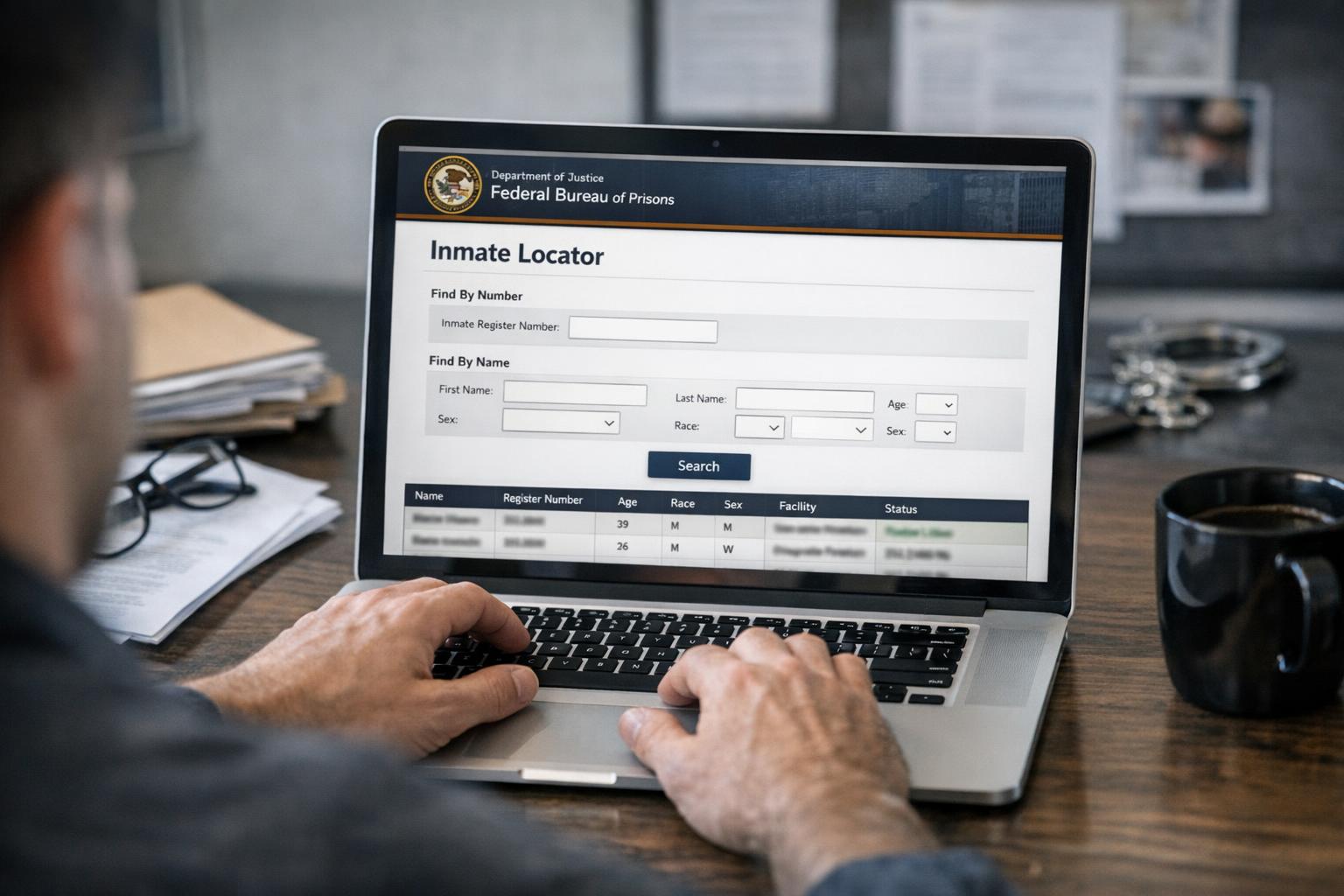
The federal inmate locator is a public, centralized search service designed to identify persons in the custody of the Federal Bureau of Prisons. It presents information such as register number, current facility, projected release date (when available), and status updates. For researchers, legal professionals, family members, and other stakeholders, this resource furnishes authoritative baseline data about federal inmates.
### Distinction Between Federal And State Systems
It is essential to distinguish the federal inmate locator from equivalent state systems. The federal tool applies only to those convicted under federal statutes and housed in federal facilities. Individuals serving time in state, local, or tribal institutions will not appear in the federal database. When seeking an individual, confirm the jurisdiction under which the person was sentenced to avoid fruitless searches.
## Preparing For An Effective Search
### Required Identifiers And Helpful Details
To maximize the accuracy of any search with the federal inmate locator, assemble the following details beforehand: full legal name, known aliases, date of birth, and, if available, the Bureau of Prisons register number. Precise spelling diminishes false negatives; including middle names or initials can reduce ambiguous matches. While the tool can perform partial-match queries, supplying complete data produces the most reliable results.
### Legal And Privacy Considerations
Public access to information about federal inmates is governed by statutory and institutional policies. The federal inmate locator conveys data intended for legitimate informational or legal purposes. Users must avoid misuse of information for harassment, discrimination, or criminal conduct. Additionally, some details may be redacted to protect safety and privacy; absence of certain information does not necessarily indicate error.
## Step-By-Step Use Of The Federal Inmate Locator
### Initial Query Procedure
Begin at the official Bureau of Prisons site and navigate to the locator interface. Enter the full name and other known identifiers in the relevant fields. If a register number is available, input it to retrieve results directly. Use controlled spelling and avoid extraneous punctuation.
### Interpreting Results
Search results will typically display a list of matching records. Review each candidate’s date of birth and registration number to confirm identity. Facility names and custody status fields provide context for where the individual is housed and whether transfers or releases have occurred. Remember that data updates may have a latency period; recent movements might not appear immediately.
#### When No Matches Appear
If the tool returns no matches, consider the following possibilities:
– The subject is incarcerated in a state or local facility rather than a federal one.
– The individual’s name has changed or is recorded under an alternate spelling.
– The person has recently been transferred to another jurisdiction or released and the system has not yet reflected the change.
Attempt expanded queries using alternative name spellings, known aliases, or date-of-birth ranges. If uncertainty persists, consult state correctional systems or court records for complementary information.
## Advanced Strategies For Precise Lookups
### Refining Searches With Limited Data
When only partial information exists, employ alternate tactics: search using a combination of first and last names with approximate birth year, or utilize internet searches that reference federal register numbers or court docket identifiers. Cross-referencing court case numbers, sentencing orders, or federal appellate documents can yield the register number necessary for a precise lookup.
### Verifying Identity And Status
After locating a likely match via the federal inmate locator, conduct verification through secondary sources: official court records, public defender or appellate documents, and, where appropriate, direct contact with the institution’s records office. Verification is particularly important when legal decisions, visitation rights, or restorative actions depend on accuracy.
## Limitations And Common Pitfalls
### Data Currency And Completeness
A central limitation of the federal inmate locator is update latency. Transfers, temporary hospitalizations, and recent releases may not be reflected in real time. Additionally, certain protective statuses or witness relocations may result in suppressed details. Users should treat the locator as an authoritative but not infallible source.
### Misinterpretation Of Terminology
Terminology within search results—such as “in custody,” “released,” or “transfer”—has specific administrative meanings. Misreading these terms can lead to incorrect assumptions about an individual’s situation. Consult the Bureau of Prisons’ glossary or contact the facility for clarification when precise status interpretation is required.
## Troubleshooting And When To Seek Assistance
### Contacting Institutional Records
If the federal inmate locator yields inconclusive information and further clarification is necessary, contact the records office of the reported facility. Provide the register number or full name and request confirmation of status or transfer details. Institutional staff can furnish up-to-date information or direct inquiries to the appropriate administrative unit.
### Using Alternative Public Records
Court dockets, the Public Access to Court Electronic Records (PACER) system, and state department of corrections databases can supplement federal searches. These resources may provide sentencing dates, docket numbers, and prosecution jurisdiction—data that aid in refining searches within the federal system.
## Legal Uses And Ethical Considerations
### Permissible Purposes For Searches
Use of the federal inmate locator should conform to lawful objectives: locating an incarcerated relative, preparing for legal representation, conducting academic or journalistic research, or verifying public records. Avoid any dissemination of information intended to endanger or harass. When using retrieved data publicly, comply with privacy laws and ethical standards.
### Protecting Sensitive Information
When handling sensitive details obtained from the federal inmate locator, implement appropriate safeguards. Limit distribution to necessary parties and ensure that any published materials do not contravene privacy protections or court orders. Institutional contacts can advise on whether particular information is subject to restrictions.
## Best Practices For Regular Users
### Maintaining Accurate Records
For attorneys, probation officers, and repeat users, maintain a secure, indexed record of register numbers and corresponding case identifiers. This practice expedites subsequent lookups and reduces reliance on name-based queries, which are prone to ambiguity.
### Periodic Reverification
Because status can change rapidly, periodically reverifying critical cases ensures decisions are made on current information. Schedule reconciliations with institutional records or set calendar reminders for follow-up checks when dates of release or transfer are imminent.
## Accessibility And Language Considerations
### Non-English Resources And Assistance
The Bureau of Prisons and affiliated facilities may offer language assistance or translation for non-English speakers. Users encountering language barriers should request help through institutional contacts or utilize court interpreter services when pursuing legally consequential information.
### Digital Accessibility
The online federal inmate locator aims to be accessible across common platforms and assistive technologies. If accessibility issues arise, contact the site’s administrative support to report barriers and request accommodations.
## Final Recommendations For Accurate Use
To achieve precise outcomes with the federal inmate locator, compile thorough identifying information, cross-reference complementary records, verify findings through institutional contacts, and respect legal and ethical boundaries. Consistent application of these practices will improve reliability and minimize misidentification in searches for federal inmates.





Leave a Reply