
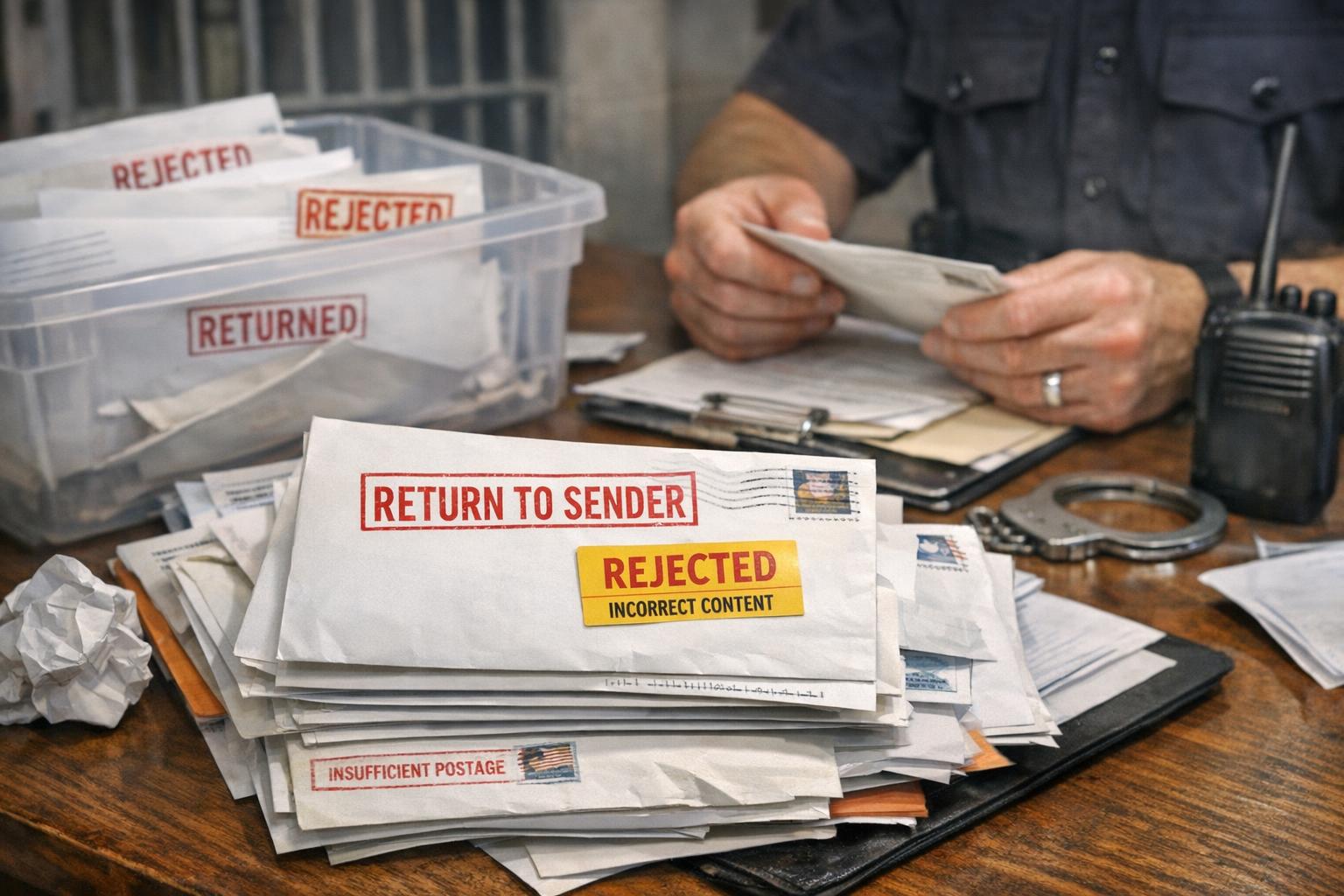
It happens more often than families expect: a letter or package you spent time on gets sent back without much explanation. The short answer is simple — prison mail rules are strict, varied, and enforced by humans who are trying to stop contraband. The rest of this article explains the common traps, what the rejection notices mean, and concrete steps you can take so your next piece of mail actually reaches the person inside.
## Why Inmate Mail Gets Returned: Common Causes
Knowing why inmate mail gets returned helps you avoid repeating the same mistake. There are predictable categories: addressing errors, banned content, improper packaging, postage problems, and facility-specific rules. Any one of those can trigger a return, and sometimes several do at once. Prisons want to control anything that could hide contraband or threaten safety; that policy shows up in everyday decisions about envelopes and photos.
Mistakes with the address are among the top reasons for inmate mail returns. If you send a letter with only the inmate’s name and no inmate ID or booking number, it may be unreadable to mailroom staff who process dozens of envelopes in a single shift. You might use the wrong facility name, or the inmate could have been moved. A mis-typed room number, misspelled last name, or incomplete facility address sends it back fast.
Another frequent cause is content rules. Publications, three-dimensional items, certain photos, stickers, glitter, and items sealed in plastic can be treated as contraband. Some facilities also prohibit certain brands of envelopes (self-sealing ones) or colored paper. If staff open the mail and find something forbidden, they’ll either remove it and forward the rest, or return the entire envelope. That’s why knowing the rules beats guessing.
Finally, some returns happen for administrative reasons: undeliverable mail when an inmate has been released or transferred, insufficient postage, or the sender’s return address missing or mismatched. You might recieve a slip that says “undeliverable,” but it won’t always explain the specific rule you violated.
### Addressing And Identification Errors
A surprising number of inmate mail returns start here. Every facility has its preferred format; most want the inmate’s legal name, followed by an ID number, then the exact facility address. Example:
John A. Smith, ID #123456
Housing Unit 4B, Cell 17
Midtown Correctional Facility
123 Prison Road
City, State ZIP
Omitting the ID, putting the housing unit where the street address should be, or addressing to a nickname will all raise flags. If a facility receives mail without a valid name/ID combo, the mailroom may not be able to match it to a current occupant and will send it back.
Also, the return address matters. Some facilities insist on the sender’s full name and address printed clearly on the envelope. No PO box? Fine. No return address? That can trigger automatic return for security reasons, especially if the facility needs to contact the sender about contraband.
#### How To Format The Envelope
Use plain white envelopes, black ink, and block letters if your handwriting is messy. Put the inmate’s name and ID on the first line; facility on the second/third. Print your return address in the top-left corner. Don’t decorate the envelope. No stickers, no glue tabs, no taped photos on the outside. These small details make the difference between delivery and inmate mail returns.
### Content And Material Restrictions
Not all paper is equal in prison mail eyes. Some facilities allow only plain white 8.5×11 paper, no staples, no paper clips, and no sealed envelopes inside the outer envelope. Others permit small greeting cards but prohibit cards with glitter or foil. Many facilities ban magazines or books sent from individuals, requiring they come directly from approved vendors. If you send something that’s not allowed, the mailroom will often send it back and mark the reason.
Photos are a common sticking point. Most prisons will accept standard 4×6 photos but ban Polaroids, nude or provocative images, and pictures with gang symbols or weapons. Photos printed on glossy photo paper are usually fine; laminated photos are not. If you include multiple photos or write on the back with adhesive, you risk a prison mail rejection.
Cash, checks, and money orders are handled differently. Many facilities don’t accept cash in the mail at all and will return any envelope containing money. Instead, use the facility’s commissary deposit methods — vendor websites, kiosks, or money orders made out per facility rules.
### Security And Screening Procedures
Mail goes through human eyes and often machines. Staff search for contraband, coded messages, and threats. Some mailrooms X-ray packages and use drug-sniffing dogs. That explains why some seemingly harmless items get flagged. It’s not personal. It’s precautionary.
This also explains why different facilities handle similar mail differently. A picture or paper that passes at one prison might be rejected at another. That’s one of the reasons people are often puzzled about why inmate mail gets returned: policies aren’t standardized across systems. When possible, check the facility’s website or call the mailroom to see their exact rules before sending anything.
Why inmate mail gets returned can also come down to staffing and interpretation. Mailroom officers make judgment calls. If yours is strict, you’ll see more prison mail rejection slips. If they’re lenient, fewer. Don’t assume your envelope will be treated the same every time.
## Practical Steps To Prevent Inmate Mail Returns
There’s no single magic fix, but practical habits reduce returns dramatically. Start with the facility’s posted rules — this is not optional. If the website is unclear, call the mailroom and ask how to address the envelope, what paper to use, and whether photos or publications are allowed. Save that guidance.
Always include the inmate’s full legal name and ID number on the first line. Use the facility’s exact address and your full return address. Keep envelopes plain and unadorned. Use regular postage and make sure you’ve prepaid enough; envelopes short on postage can roll back into the sender’s hands.
Use approved vendors for books, magazines, or retail goods. Many departments of corrections maintain lists of vendors that will ship directly to inmates; using those vendors avoids many prison mail rejection issues. For deposits, use the facility’s preferred payment methods so money doesn’t come back in the mail.
When in doubt about a photo or an attachment, leave it out. It’s annoying to have a heartfelt letter returned because you slipped in a forbidden sticker or a laminated photo. Don’t assume what worked once will work every time. Policies change; transfers happen. A one-time success is not a guarantee.
### If Mail Has Already Been Returned
First, read the return notice. Some returns include a reason, like “insufficient postage” or “prohibited content.” If the slip is vague, call the mailroom and ask for a specific explanation. If a rule was violated, correct the issue and resend. If the inmate was transferred or released, check inmate locator tools for their new location before resending — that prevents repeated inmate mail returns.
If you believe the mail was improperly rejected, document the item and the correspondence with the mailroom and ask for a supervisor review. Sometimes a second look will reverse a rejection, especially if a policy was misapplied. Keep copies of what you sent and any receipts; that paper trail helps if there’s a dispute.
#### Templates And Checklists To Use
Create a simple checklist before you mail:
1. Inmate Full Name + ID Number — confirmed.
2. Facility Address — copied from official site.
3. Sender Return Address — printed on envelope.
4. Allowed Content — verified (no cash, restricted photos, no laminate).
5. Postage — sufficient and affixed.
6. Packaging — plain envelope, no extra tape/stickers.
A one-page template for the envelope and a short checklist kept by your mailbox reduces dumb mistakes that cause inmate mail returns.
## Common Misunderstandings That Lead To Returns
People assume phrases like “legal mail” or “personal mail” will exempt an item from screening. Not true. Legal mail may receive special handling, but only when it’s clearly marked, sealed, and accompanied by correct legal identifiers. Mail labeled “urgent” or “do not open” won’t bypass security. Another common misconception: that putting the inmate’s nickname will be acceptable. It usually isn’t.
People also think sending items via overnight carriers always works better. It doesn’t. Overnight shipping still needs to meet facility content and addressing rules. You can waste money on expedited shipping only to have the parcel returned for the same reasons regular mail was returned.
Finally, don’t assume facility staff will contact you to explain a prison mail rejection. Often they won’t. That’s why the checklist and confirming rules upfront make such a big impact. Small up-front effort saves repeated trips to the post office and anxious waiting for the person inside.
Keep a calm, methodical approach. Mailroom rules aren’t meant to punish senders; they exist to keep staff, visitors, and inmates safe. Once you stop guessing and start following the exact rules, the rate of returned mail falls steeply. Avoid the common traps listed here and you’ll spend more time communicating and less time fixing mistakes that waste money and time.
(And remember — before you hit send one last time, check that you didn’t accidentally include a stapled photos or a laminated page. They’ll get you a swift and annoying returned envelope, and you’ll buy stamps again for nothing. Also, try not to use handwriting that’s impossible to read; printing helps, and you’ll recieve fewer follow-up calls asking what the envelope says.)



Leave a Reply