
You Won’t Believe How Much A Bag Of Chips Can Cost Behind Bars — And The Reasons Are Worse Than You Think!
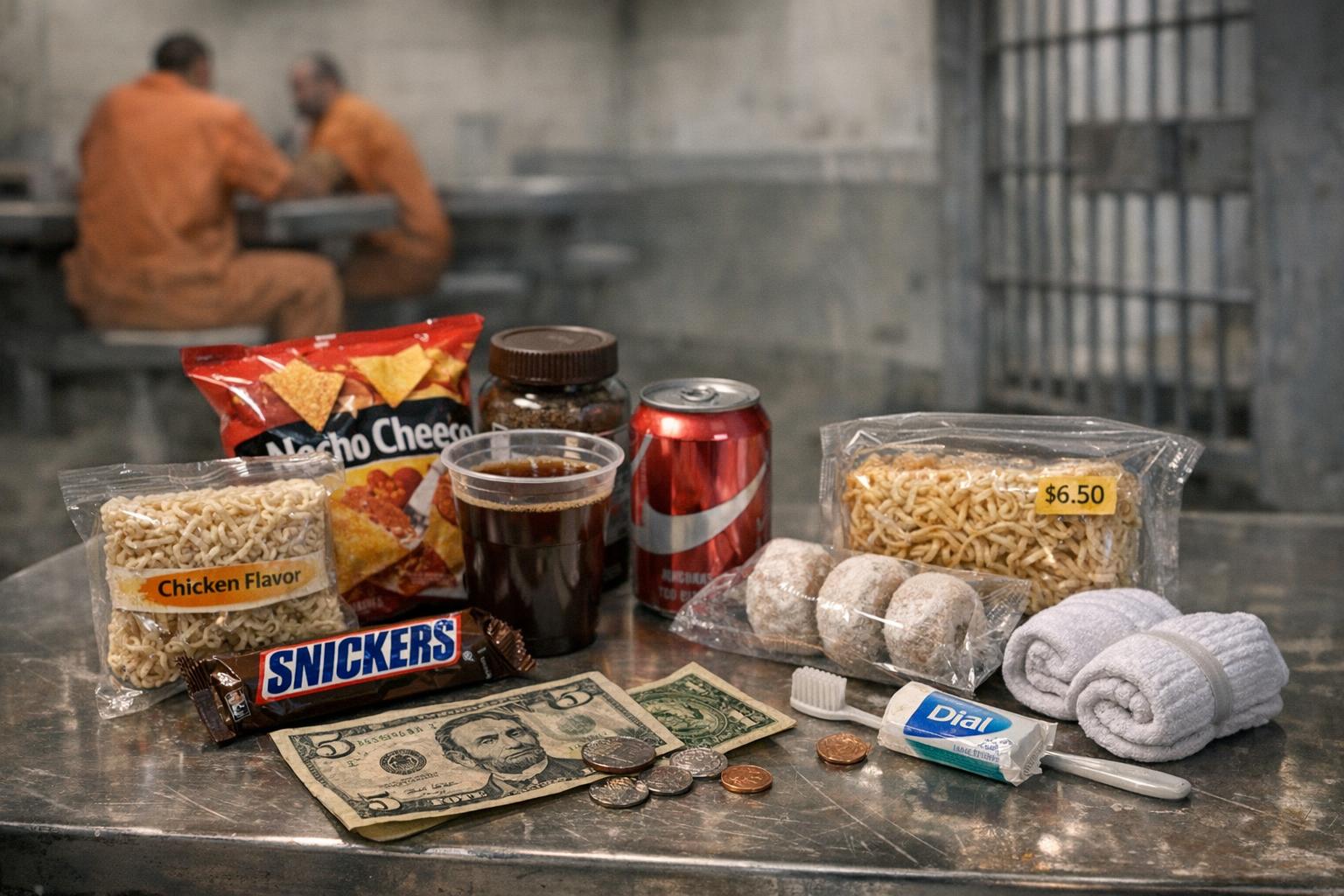
Prison commissaries are supposed to be a lifeline: places where inmates can buy a few comforts, snacks, hygiene items, or stationery. Instead they’re often shockingly overpriced, and families and inmates alike get squeezed by hidden fees, markups and policies that look a lot like modern-day price gouging. When you dig into the systems that create those skyrocketing tabulations, the picture is ugly — and infuriating.
## Shocking Truth: Why Is The Commissary Expensive In Prison
The burning question on everyone’s lips is plain and simple: why is the commissary expensive in prison? The short answer is a toxic mix of monopolistic contracts, bureaucratic “service” fees, poor oversight, and profit-driven vendors who exploit captive markets. These forces combine to create a commissary cost structure that bears little resemblance to the open market and everything to do with control and cash flow.
### The Hidden Machinery Behind Sky-High Prices
Commissary systems are not neutral convenience stores. They are parts of institutional contracts and revenue streams. Vendors that win the right to operate commissaries pay the prison or government an administrative fee or share of revenue — and then pass that cost straight to customers inside. Add logistical expenses for delivering to remote facilities, shrinkage, and layers of middlemen, and the result is dramatic and deliberate inflation of canteen prices. The captive nature of the “customer base” makes it easy to maintain those margins; inmates have no alternative.
### How Policy And Profit Collide
When you ask why is the commissary expensive in prison, think about incentives. Correctional institutions often use commissary revenue to fund amenities or staff positions, which creates a perverse incentive to accept high markups. Vendors are given near-monopoly status through long-term contracts and limited bidding processes. In practice, that means the state gets a cut and the vendor gets guaranteed business — and the inmate pays full freight.
### The Layers Of Fees That Inflate Commissary Cost
It isn’t just the sticker price. Many states and facilities tack on transaction fees, per-package handling fees, and even “administrative charges” that show up on a commissary cost breakdown. Families adding funds to inmate accounts may be charged reload fees or convenience charges by third-party processors. Those fees get hidden in the fine print and become a recurring burden on those already stretched thin.
### Canteen Prices Versus Retail Prices: An Astounding Gap
You’d expect some difference between retail and prison prices due to logistics. What you get instead is gouging. Canteen prices routinely exceed supermarket prices for the same items by 50–200% or more. The price gap is especially acute for electronics, toiletries, and branded snacks — items inmates cannot otherwise obtain. That’s why so many people demand reform when they ask why is the commissary expensive in prison.
### Who Wins And Who Loses?
The winners in this system are the vendors, processors, and sometimes the institutions that receive revenue shares. The losers are incarcerated people and their families, who pay inflated canteen prices for necessities and comforts many believe should be affordable. Unsurprisingly, advocates argue that this system disproportionately affects low-income families and perpetuates cycles of hardship.
### Fraud, Waste And Lack Of Oversight
One of the most shocking drivers of high commissary cost is lack of strict auditing. Audit trails may be incomplete, inspections infrequent, and contract terms opaque. Where oversight is weak, unscrupulous practices — from inflated wholesale costs, to incorrect invoicing — can flourish. That’s why asking why is the commissary expensive in prison often leads to investigations revealing procedural abuses.
### Social And Psychological Factors That Mask The Problem
There’s also a psychological element. Commissary purchases are often framed as privileges or rewards, minimizing outrage over price gouging. Because items are paid for with limited accounts and not cash in hand, the true cost can be less visible to outside observers. The normalization of elevated commissary cost dulls public scrutiny until a scandal breaks.
## Reforms And Remedies: How To Reduce Commissary Cost (1 Practical Remedy)
When the sensational outrage fades, what’s left is the practical work of reform. Below is a structured, formal remedy designed to reduce canteen prices and the commissary cost burden on inmates and families. This is presented as a policy and operational blueprint rather than a sweeping ideological solution.
### Evidence-Based Remedy: Implement Transparent Competitive Procurement And Oversight
#### Materials And Stakeholders Required
– Procurement Policy Document Template (model contract clauses)
– Independent Audit Team (external auditors with forensic accounting experience)
– Price Benchmarking Database (retail price comparisons and logistics cost models)
– Transaction Processing Platform With Fee Caps (or in-house payment processing)
– Oversight Committee (including prisoner advocates, family representatives, and independent experts)
– Implementation Timeline And Compliance Checklist
#### Step-By-Step Implementation And Application
1. Establish Policy Objectives
– Define clear goals: reduce average canteen prices to within a fixed percentage of retail benchmarks (e.g., within 20%), eliminate arbitrary administrative fees, and ensure revenue sharing does not incentivize price inflation.
2. Design Competitive Tendering Process
– Require open, public RFPs for commissary contracts with strict criteria: transparent pricing models, limits on allowed markups, penalty clauses for overcharging, and requirements for price parity clauses referencing regional retail prices.
3. Create Pricing Benchmarks
– Build or subscribe to a benchmarking database that lists wholesale and retail prices for common commissary items and logistical cost assumptions. Require vendors to justify prices relative to benchmarks.
4. Prohibit Hidden Fees
– Explicitly ban transaction and administrative fees above a capped amount for both inmate accounts and family deposits. Mandate that any processing fees be borne by the vendor or institution, not the customer.
5. Require Real-Time Price Transparency
– Implement an online or on-premises pricing display that lists the retail comparison for each item and shows vendor markup percentage. Make the data accessible to inmates, families, and oversight bodies.
6. Implement Independent Auditing
– Contract with external auditors to conduct biannual forensic audits of commissary cost structures and sales. Publish executive summaries of findings publicly to ensure accountability.
7. Build Oversight And Appeals Mechanisms
– Form an oversight committee with diverse representation empowered to review pricing disputes, recommend contract terminations, and oversee compliance.
8. Transition To Fairer Payment Processing
– If third-party processors charge high fees, negotiate lower rates or bring processing in-house with capped fees. Explore low-cost reload options for families, such as ACH transfers with minimal transaction charges.
9. Pilot Program And Scaling
– Run a pilot in a small number of facilities, measure price changes and inmate satisfaction, then scale with adjustments to the procurement template based on findings.
10. Enforcement And Continuous Monitoring
– Include contractual penalties for breaches and ongoing monitoring dashboards that track canteen prices vs. benchmarks.
### Expected Outcomes And Metrics
– Reduction in average commissary cost by targeted percentage within 12 months.
– Decrease in complaints related to canteen prices and fee disputes.
– Increased transparency measurable by publication of price comparisons and audit reports.
## The Human Toll Behind The Numbers
When you step away from the spreadsheets and audit clauses, the answer to why is the commissary expensive in prison becomes heartbreakingly human. Parents scraping together funds to send a small treat, prisoners forced to economize on hygiene or suffer hunger, loved ones facing repeated transaction fees — these are the real costs of inflated commissary cost structures and outrageous canteen prices. Public outrage has fueled reforms in some jurisdictions, but the problem persists where contracts and oversight remain opaque.
### How Families Can Protect Themselves Today
Families and advocates can take immediate, practical steps: compare prices before sending funds, demand receipts that show itemized canteen prices, push for transparency through Freedom of Information requests, and support organizations that monitor and litigate on behalf of inmates. Public pressure combined with targeted policy fixes can chip away at entrenched pricing abuses — but only sustained oversight will dismantle the incentives that answer the central question: why is the commissary expensive in prison.
The facts are alarming, the mechanics are avoidable, and the remedy requires both political will and meticulous process changes. The outrage is justified — and the pathway to fairer canteen prices exists if stakeholders choose to use it.





Leave a Reply