
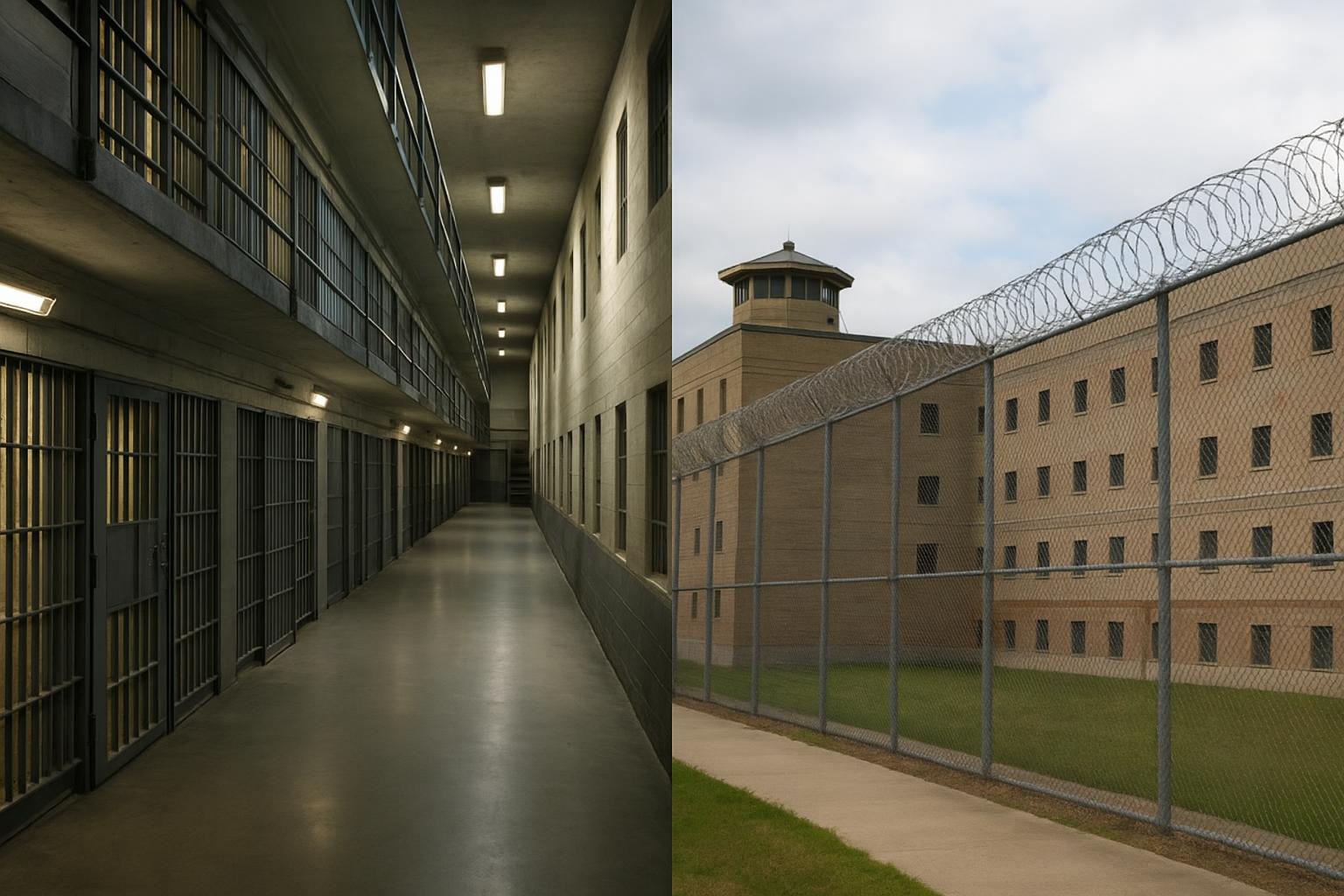
## Differences Between Jail And Prison: Policy Versus Daily Life
Jails and prisons are often lumped together in casual speech, but they operate on different rules and expectations. The differences between jail and prison show up in who gets held, for how long, and what life looks like day to day. If you want to understand the system or help someone navigating it, those distinctions matter.
### Who Goes Where And Why It Matters
Jails are short-term facilities run by counties or cities. People in jail are usually awaiting trial, serving short sentences (typically under a year), or held on technical violations like probation or parole holds. Prisons are run by state or federal authorities and hold people serving longer sentences after conviction.
This split shapes everything. A person in jail can be moving through multiple custody statuses in a few days—post-arrest booking, pretrial, arraignment, bond hearings. Because of that churn, jails tend to focus on intake, safety, and immediate needs. Prisons run longer-term programs: education, job training, long-term medical care.
### Legal Status And Access To Rights
People in jail are often pretrial. That means they’re legally presumed innocent, but in practice their daily life is still constrained. Access to counsel tends to be sporadic: attorneys visit during limited windows, and phone time for prepping a defense is tight. In prison, legal issues still come up, but the pace is slower. Inmates have more predictable schedules to file paperwork or meet with lawyers.
Jail vs prison from a policy angle: pretrial detention raises different constitutional questions than post-conviction incarceration. Bail practices, speedy trial requirements, and overcrowding in jails can prompt immediate legal challenges. Prison differences often concern parole boards, sentence calculation, and long-term constitutional claims about conditions of confinement.
### Intake, Classification, And Unit Assignments
#### Initial Booking Procedures
When someone is booked into a jail, they go through fingerprinting, a health screen, and often a quick classification that determines housing—general population, medical, or protective custody. These procedures are fast because the population turns over quickly.
#### Classification In Prison
Prisons perform detailed classification reviews. They assess security risk, gang ties, medical and mental health needs, and program eligibility. That classification determines cell placement, work assignments, and access to rehabilitative programs. The process is slower but more structured.
### Daily Routines And Movement
Daily life in jail is chaotic. Schedules are frequently interrupted for court transports, new arrestees, and lockdowns. People might share crowded cells with strangers they just met. Personal property is limited; commissary access exists but is basic. Visitation is often restricted and brief, sometimes through glass.
In prison, routines are more stable. There are scheduled work shifts, educational classes, and regular recreational periods. Cells or dorms may be shared, but assignments are usually for the long term. That steadiness allows for program planning, from GED classes to vocational training.
The differences between jail and prison also show in movement: jails move people to court frequently. Prisons move far less, mainly for medical trips, transfers, or family visits.
### Programs, Work, And Rehabilitation
Prisons tend to offer a wider range of programs: substance abuse treatment, cognitive behavioral therapy, trade apprenticeships, and college courses in some systems. These programs are designed around the idea that the resident will be there long enough to benefit.
Jails sometimes have programs, but they’re limited. You might find short-term counseling, basic job-readiness workshops, or reentry planning for people about to be released. For many in jail, the stay is too short to complete multi-week interventions.
Work assignments differ too. Jail work is mostly maintenance or kitchen detail and often handled by county staff. In prison, inmates can be assigned to industry jobs that pay small wages and sometimes lead to certifications. That difference feeds into broader prison differences like sentence credits and early-release incentives tied to program completion.
### Healthcare, Mental Health, And Chronic Care
Healthcare presents a stark contrast. Jails must do initial medical screenings and tend to focus on acute issues—withdrawal management, injury care, or contagious disease control. Chronic disease management is usually minimal.
By contrast, prisons have established medical units capable of long-term care: regular chronic disease monitoring, psychiatric care, and sometimes even long-term nursing. That doesn’t mean care is excellent; far from it. But the infrastructure exists in prisons in a way it often doesn’t in jails. This gap causes problems when someone with chronic needs cycles through jail repeatedly.
### Safety, Violence, And Overcrowding
Short stays and mixed populations make jails unpredictable. You can have someone arrested for a nonviolent misdemeanor housed next to someone awaiting trial on violent charges. That mix increases incidents of fights and assaults. Overcrowding magnifies those risks.
Prisons are segregated by security level. Maximum security units are designed to keep violent offenders isolated from lower-risk populations. That reduces certain types of violence but creates other issues: prolonged isolation, stricter restrictions, and greater use of force. So the jail vs prison reality is not “prisons are safer,” but rather “risk types differ.”
### Visitation And Communication
Visitation rules differ sharply. Jails often restrict visits because of space and security needs. Visits may be behind glass, brief, and infrequent, which makes it harder to maintain relationships.
Prisons generally offer more regular in-person visits, sometimes with more privacy. Phone and video systems exist in both settings, but costs vary. Private contracts for phone calls and video visits can be expensive in either setting. Families shoulder part of the burden, which affects who can stay connected.
### Staff Roles And Training
Correctional officers in jails are prepared for high turnover and emergency response—intake fights, medical crises, and court transports. Training focuses on safety and quick decision-making. In prisons, officers work with long-term populations. They receive training on custody classification, inmate programs, and longer-term behavior management.
This affects daily interactions. Jail staff decisions are often defensive and reactive; in prison, staff might develop routines and relationships that, for better or worse, shape day-to-day life.
### Transfers, Appeals, And Administrative Processes
Administrative processes vary. Inmates in prison have structured avenues for appeals, grievances, parole hearings, and sentence credits. Those systems take time but are established.
In jails, you see more immediate legal motions: bond hearings, quick plea deals, or emergency motions for medical care. The fast pace means legal advocates must be nimble. The overall differences between jail and prison include how paperwork, hearings, and transfers are handled.
### Financial Costs And Funding Structures
Jails are funded by local governments; prisons by state and federal budgets. That leads to different resource levels. A county jail may struggle to fund mental health staff or adequate medical services. State prisons may have larger budgets and program funding, but they also manage huge populations across facilities which can dilute resources.
Families feel this too. Costs for commissary, phone calls, and release-related expenses differ. Private contracts for services can appear in both places, but the scale and profit motives vary.
### Reentry, Parole, And Long-Term Outcomes
Reentry work looks different across the two settings. Someone released from a short jail stay needs immediate help: housing, employment, and basic ID documents. There’s little time for organized reentry services.
Prison reentry often involves parole boards, supervised release conditions, and longer-term planning. Programs in prison can include transitional housing and halfway houses to bridge the gap. Outcomes often hinge on whether an individual had access to meaningful programming and stable conditions while incarcerated.
### Public Perception And Policy Debates
Public policy debates often confuse the two. Calls to “decarcerate” sometimes mean cutting jail populations by reforming bail; other times they target mass incarceration in state prisons. Understanding the differences between jail and prison clarifies policy choices. Bail reform affects jail populations directly; sentencing reform and parole reform address prison populations.
Arguments about rehabilitation versus punishment also shift depending on whether you talk about jails or prisons. Policymakers who want to reduce recidivism need to match interventions to the setting: short-term supports for jail releases and deeper program investments in prisons.
#### A Quick Practical Example
Consider two people arrested for DUI. One is held in the county jail for a day until bond is posted. The other, convicted of a felony DUI with injury, is sent to state prison for years. The first will face chaotic daily life, few program options, and immediate legal maneuvering. The second will navigate classification, long-term medical care if needed, and the possibility—however limited—of vocational training and parole planning. This simple scenario shows the jail vs prison split in practice.
## How Policy Shapes Daily Life: Small Differences That Add Up
Policy decisions—who receives treatment for addiction, how bail is set, or whether counties fund mental health diversion—translate directly into daily outcomes. A jail policy that restricts phone hours can strain a family’s ability to stay in touch. A prison policy that offers vocational certification can change a person’s prospects after release. Those are the prison differences that matter in long-term outcomes.
One last practical note: if someone you know is in custody, ask whether they are in jail or prison. That single question tells you about legal timelines, visitation options, and what support will be most useful. It also helps avoid the common, unhelpful assumption that all lockups work the same way. Trust me, they do not.
Occasionally, reports will use the terms interchangeably. Don’t let that confuse you. Knowing these distinctions can guide advocacy, legal strategy, and family planning. And remember: systems are messy. Policies are written one way, but how they’re applied on any given day can be quite different, sometimes for reasons that are administrative, sometimes for reasons that are simply human. The gap between policy and practice is large and it definately matters.



Leave a Reply