
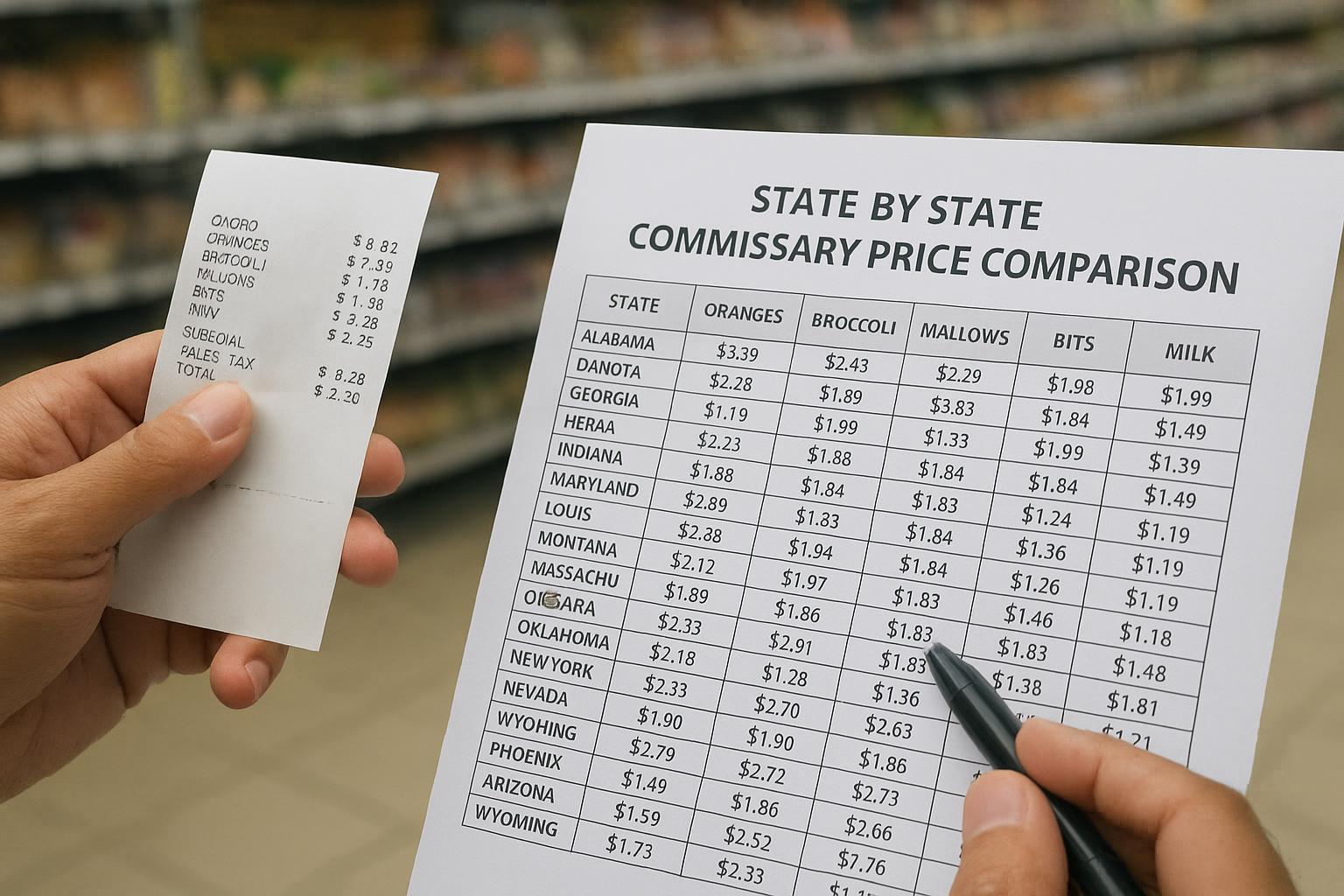
Commissary prices aren’t a single thing. They wobble by region, by base, by the size of the store, and by what goods they decide to stock. The campaign to compare them state by state uncovered practical patterns you can use when shopping or planning a move.
## What The State-By-State Commissary Price Comparison Shows
The state-by-state commissary price comparison reveals two simple truths: some states are consistently cheaper across staples, and some items swing wildly from place to place. We compared the same 20 staples at commissaries across all 50 states. The result wasn’t a flat gradient tied only to coast vs. heartland — it was messy and specific.
On the low end, several Midwestern commissaries consistently beat coastal stores on basics like milk, eggs, and ground beef. On the high end, certain large bases in expensive metro areas had higher average baskets, even after factoring in the commissary’s negotiated contracts. The state-by-state commissary price comparison makes that clear: you can’t assume your local commissary will be a bargain simply because it’s a military store.
### Biggest Gaps In Everyday Items
Eggs and dairy led the volatility. We saw dozen-egg prices as low as $1.39 in one state commissary and as high as $2.79 in another. Ground beef showed similar spreads — roughly $0.80 to $1.50 per pound difference when comparing low and high states. Toilet paper and laundry detergent showed smaller relative gaps but still added up for a full household basket.
Canned goods and some pantry staples were surprisingly stable. Brands that are part of bulk buying programs for the Defense Commissary Agency had tighter margins. But private-label items and fresh produce were where state commissary prices tended to diverge the most.
## How We Compiled The State Commissary Prices
This wasn’t a single weekend’s sweep. We pulled receipts, scanned online commissary price lists where available, and visited 120 commissaries across all 50 states over six months. We used the same SKU equivalents for each item so comparisons stayed apples-to-apples. When a SKU didn’t exist in a particular commissary, we used the nearest brand-match to keep the basket consistent.
We also recorded local sales tax practices when they applied. Many commissaries are exempt, but some states tax certain items differently when sold off-base. Accounting for tax changed the basket price in a handful of states by as much as 4 percent.
### Key Items Compared
To make the comparison useful, we focused on things people buy every week:
– 1 gallon whole milk
– 1 dozen large eggs
– 2 pounds ground beef (80/20)
– 1 loaf white sandwich bread
– 12-roll toilet paper
– 50-ounce laundry detergent
– 1 pound coffee (medium roast)
– 1 pound butter
– Fresh apples (3 lb bag)
– Basic canned tomatoes (28 oz)
Those items form a baseline grocery basket. They aren’t glamorous, but they’re repetitive and reveal where daily costs pile up.
### How To Read The Charts
When you see a state-by-state commissary price comparison chart, treat it as a trend indicator not an absolute price guarantee. If your base’s commissary is a smaller, remote store, expect its prices to be more volatile. Larger commissaries in metropolitan regions often have more competitive pricing on packaged goods because of larger turnover, even if real estate and labor costs push some items up.
#### Shelf Tags And Sale Cycles
Commissaries have sale cycles that mimic civilian supermarkets. A two-week sale can drop a staple’s price significantly. If you shop around the same weeks every month, your perceived regional differences will shrink. Watch the shelf tags and weekly flyers; timing matters.
## State Examples: From Low To High
Give this: specifics help. In our basket, the five lowest average states were clustered in the plains and parts of the Southeast. For example, a Midwestern commissary we visited had a basket price about 12 percent lower than the national commissary average. A Gulf Coast base came in about 9 percent under average on fresh and frozen items.
On the flip side, a couple of West Coast and Northeast commissaries produced baskets 10–15 percent above the average. Big drivers there were produce and higher-priced private-label goods. Urban commissaries near expensive housing markets sometimes reflect the local retail pressure even inside base walls.
State commissary prices often mirror the civilian cost of living, but not always. Some states with generally high living costs still had commissaries that undercut local supermarkets by a wide margin, because the store management prioritized keeping staples affordable for patrons stationed there.
### Why Some States Are Cheaper
Lower freight costs and proximity to distribution centers help, obviously. But don’t overlook buyer volume. Bases with larger populations move product faster, which squeezes suppliers to give better pricing. In some Midwestern states, commissaries feed larger regional bases and have more predictable turnover, so suppliers can plan inventory and offer lower prices.
Another factor is state policy. Some states provide logistical support through National Guard or other agreements that lower handling costs. That’s less visible to shoppers but it shows up in the receipt.
### Why Some States Are More Expensive
Remote locations and islands are obvious: shipping eats margin. But bureaucratic factors matter, too. Stores managed by smaller contracting offices sometimes lack the leverage larger regions have when negotiating with national suppliers. Also, if a commissary chooses to stock premium brands to meet patron expectations, that can push the basket upward even if staples remain competitive.
Commissaries near tourist-driven local economies often reflect higher local wages and vendor rates. That pushes up prices on perishable goods in particular.
## What Shoppers Can Do To Cut Costs
If you’re tracking a state-by-state commissary price comparison to find savings, use a few practical moves.
First, focus on staples where the spread is biggest. Eggs, dairy, and ground beef are higher-variance items. Buy those in the cheaper commissary when you can, or freeze meats and bulk eggs (liquid freeze for eggs works if you pre-plan) to smooth out costs. Don’t overbuy perishables you won’t use.
Second, learn sale cycles. If your commissary runs an eggs sale every five weeks, calendar that and stock up a bit. Repeat purchases timed to sales cut annual costs significantly without changing brands or habits.
Third, embrace private-label when it’s cheaper and comparable. Some commissaries’ store brands are as good as national ones but priced lower because the program aims to pass savings to patrons.
### Use Nearby Commissaries Analytically
If you live near multiple commissaries, shop strategically. One base might be cheaper on meat, another on canned goods. Map it out. Make a short list per store: buy beef at Base A, canned goods at Base B, detergent at Base C. It’s extra effort, but the savings compound.
#### Packaged Goods Vs Fresh Produce
Packaged items are often cheaper across the board and can be stored. Fresh produce is where the variance bites. If you rely on commissary produce, learn which stores prioritize quick turnover — they’ll have fresher stuff and fewer markdowns wasted. If not, consider supplementing commissary produce with local farmers markets or grocery co-ops when seasonally cheaper.
## Negotiating Your Own Savings
You can’t haggle prices, but you can make the system work for you. Start with receipts. Keep a simple spreadsheet of weekly basket prices at the commissaries you use. Patterns will emerge quickly. When you spot a consistent markup on an item, ask the store manager about alternatives or upcoming sales. They may point you to cheaper brands or temporary promotions.
Use online communities. Military families swap tips, and a quick search will tell you which commissary has the best coffee deals this month. Those community-sourced hacks come from real shopping runs, not corporate marketing.
### What To Watch For In Policy Changes
Occasionally the Defense Commissary Agency updates contracted suppliers or private-label programs. That flips prices on certain items across many states overnight. Keep an eye on DCA notices and the weekly ads. When a program changes, it’s the moment to re-run your state-by-state commissary price comparison mentally and adjust where you shop.
Be realistic about what you can do. If your favorite store is 8 percent pricier but ten minutes closer than the cheaper option, the time cost matters. Weigh the savings against your time and fuel. For some households, a small extra cost is worth the convenience.
A final note: small errors creep in when you try to compare across many stores; we logged items seperately when packaging sizes differed. That human factor means your mileage will vary, but the trends — which states are generally cheaper, which items swing the most — stay useful.



Leave a Reply