
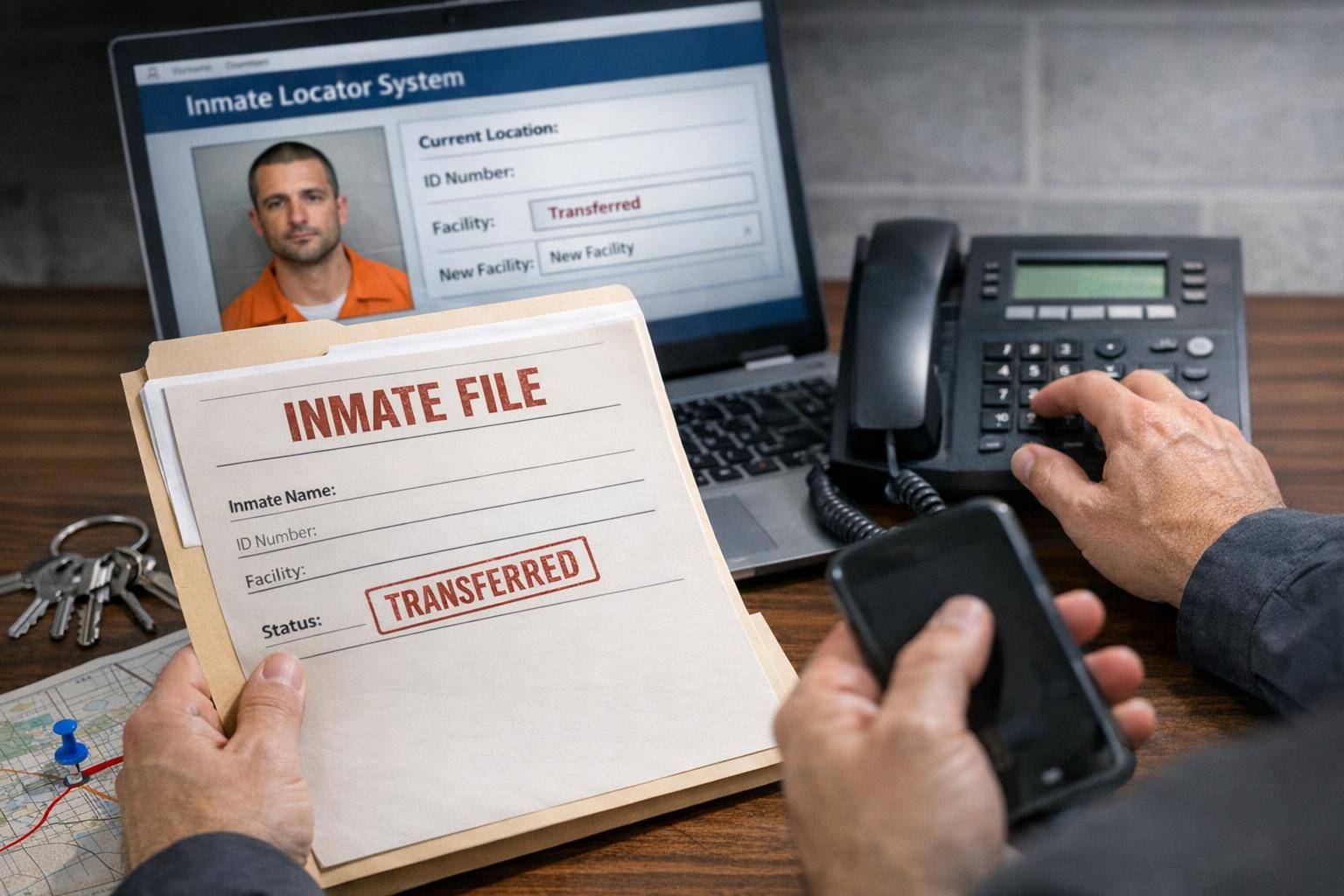
A late-night phone call, a worried sibling at the door, or a Google search that leads to dead ends — learning where a loved one is can feel like chasing a ghost. This guide turns the hunt into a methodical search, with creative clarity and practical, formal steps to confirm movement within the carceral system.
## How To Find Out If An Inmate Was Transferred
If you need to know how to find out if an inmate was transferred, start with the simplest, most official sources first. Corrections systems are decentralized; state prisons, county jails, federal facilities, and private operators each keep different records. The phrase “how to find out if an inmate was transferred” is the question; the answer is a layered approach that combines online tools, direct contacts, and paperwork.
### Understand The Basics Of An Inmate Transfer
Transfers happen for many reasons: security classification changes, medical needs, court appearances, overcrowding, or administrative moves. An inmate transfer may be short-term or permanent; the difference affects where you look for transfer status. When considering how to find out if an inmate was transferred, keep in mind that short-term moves (e.g., to a local courthouse) may not always be widely recorded.
### Official Online Databases And Search Tools
Many jurisdictions provide online inmate locators. These tools are the quickest way to check transfer status, though interfaces vary widely.
– Federal inmates: Use the Bureau of Prisons (BOP) inmate locator.
– State inmates: Check the state Department of Corrections website.
– County jails: County sheriff or jail sites sometimes maintain rosters that include booking and release dates.
When using an online search, enter the inmate’s full legal name, date of birth, and, if available, booking number or inmate ID. If a database returns “no records found,” it may mean the inmate is in a different system or has been transferred out of the searchable database. If you still can’t determine how to find out if an inmate was transferred, move to direct verification methods.
### Call The Facility Directly For Verified Information
When online resources fail, make a formal phone inquiry. This is the most reliable step for confirming transfer status.
– Ask to speak to records, classification, or the jail/prison operator’s public information officer.
– Provide the inmate’s full name, date of birth, and inmate ID if known.
– Request the current transfer status and the date and destination of any recent moves.
Be prepared: staff may refuse to provide some information for privacy or safety reasons. If so, ask what process an approved family member must follow to obtain transfer details.
### Contact The Sending And Receiving Facilities
If you suspect an inmate transfer between two facilities, contact both the sending and the receiving locations. The sending facility can confirm departure dates; the receiving facility can confirm arrival and the updated transfer status. When asking, use formal language and reference any IDs or case numbers.
### Use Third-Party Services And Registry Searches
Private inmate locators, victim notification systems (VINE), and legal service platforms can supplement official sources. VINE often provides automated notifications about changes in an inmate’s status, including transfers. These third-party tools vary in scope and accuracy, so treat them as supportive rather than definitive when determining how to find out if an inmate was transferred.
### What To Have Ready Before You Call Or Search
#### Documents And Details To Prepare
Having the right information increases your chance of a quick, accurate answer about any inmate transfer.
– Full legal name and common aliases
– Date of birth
– Inmate ID, booking number, or case number
– Last known facility and approximate dates
– Relationship and proof of relationship, if requesting restricted information
### How To Make Formal Records Requests
If phone calls and online searches do not provide a clear transfer status, file a written request. Many jurisdictions accept public records or freedom of information requests for movement logs and transfer notices. Be specific about dates and the nature of the information you seek, and include contact details for response. Track your request and follow up if you don’t receive an acknowledgement.
### Visit In-Person When Necessary
A respectful, in-person visit to a records office or public information desk can cut through delays. Bring photo ID and any documents proving your connection to the inmate. Staff can sometimes pull physical logs or explain policies that limit what they can disclose over the phone. When you need fast clarity on transfer status, an in-person visit is often the most effective.
### Legal And Privacy Considerations
Corrections agencies balance public access with safety and privacy. Some transfer details—especially those involving protective custody, sensitive medical moves, or juvenile transfers—may be confidential. If your inquiry concerns visitation rights or legal representation, consult an attorney who can request information under attorney-client privileges.
### Tips For Accurate Searching And Avoiding Pitfalls
– Spell names exactly and try alternate spellings. Typos derail searches.
– Use date-of-birth and inmate ID to disambiguate common names.
– Remember that a “no record” result can mean a transfer to another jurisdiction or a recent move not yet updated online.
– Ask for timeframes. Some systems update nightly; others lag by days.
– If language is a barrier, request translation services when calling or visiting.
### What To Do If You Discover A Transfer
If you confirm a move, act quickly to update visitation plans, mail addresses, and legal contacts. Transfers can change visitation schedules and inmate access to programs. Immediately notify attorneys, probation officers, or advocates as appropriate, and ensure incoming mail and commissary arrangements are redirected to the new facility.
### How To Track Ongoing Transfer Status
To maintain ongoing awareness of an inmate’s movement, register for automated alerts where available. The victim notification systems and some state portals allow you to receive emails or texts whenever the inmate’s transfer status changes. This hands-off method reduces repeated manual searches and provides near-real-time updates.
### When To Seek Help From An Attorney Or Advocate
If you encounter barriers—refusal to disclose transfer information without legal cause, inconsistent records, or safety concerns—consult legal counsel or an inmate advocacy group. These professionals can file formal requests, intervene with correctional authorities, and pursue channels you may not access as a private citizen.
### Common Scenarios And How To Respond
– If the inmate was moved for medical reasons: Request medical transfer documentation and visitation exceptions if appropriate.
– If you suspect an illegal or punitive transfer: Record dates and communications, and consult an attorney experienced in prisoners’ rights.
– If you simply can’t find them online: Expand your search to federal, state, county, and private facility lists, and register with notification services.
### Checklist For Verifying A Transfer
– Confirm the inmate’s ID and full name.
– Check the sending facility’s public roster or contact records.
– Search the receiving facility’s roster and online locator.
– Register for automated notifications (VINE or similar).
– File a formal records request if necessary.
– Consult an attorney or advocate for privacy or rights issues.
If the goal is to know how to find out if an inmate was transferred without wasting time, follow the layered method above: start online, call the facility with prepared documentation, register for automated notifications, and escalate to formal records requests or legal counsel only when necessary. This sequence balances speed with accuracy and respects the protocols of correctional systems while keeping your inquiry effective.





Leave a Reply