
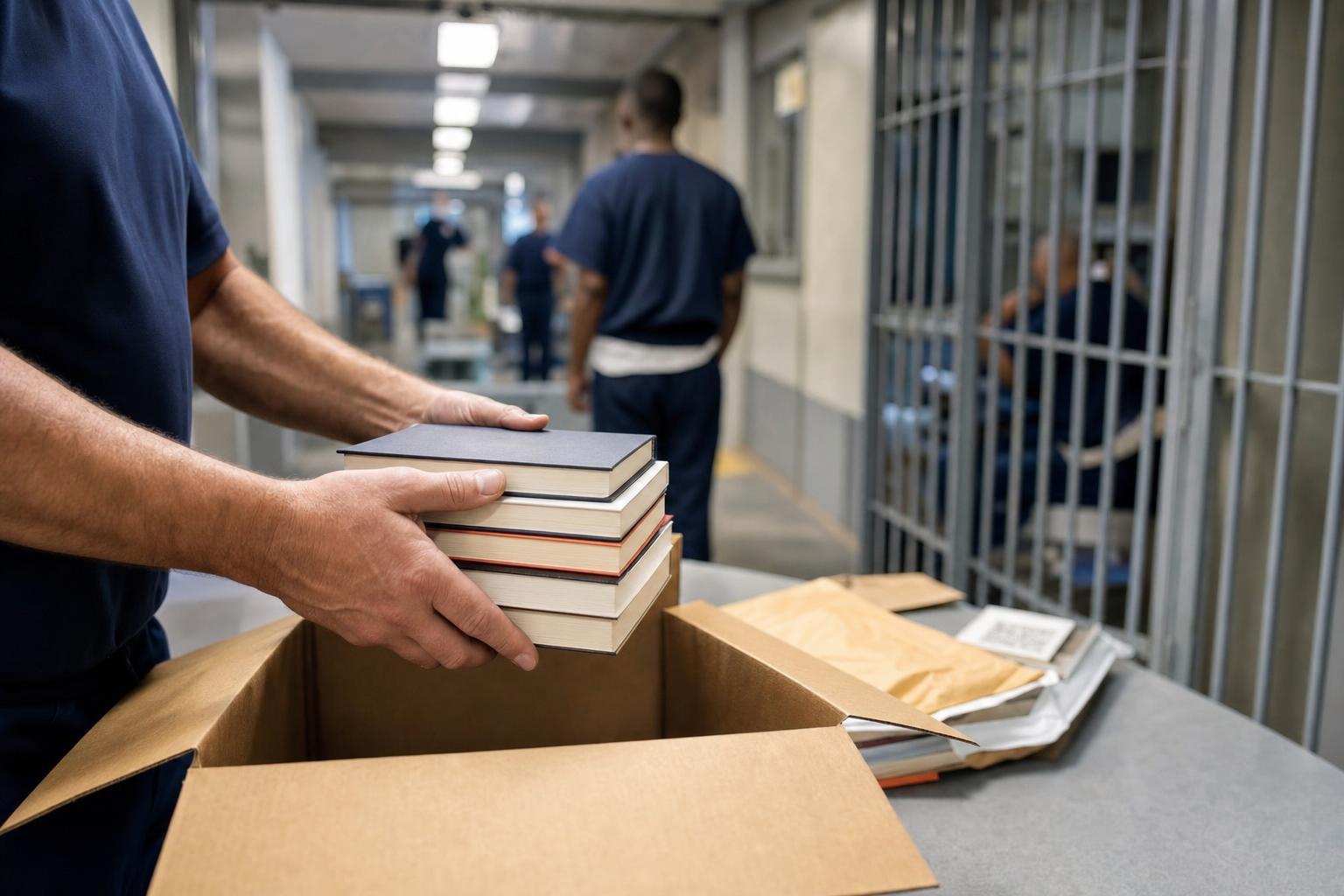
Most jails and prisons won’t accept a book sent from your house. They want books to come directly from an approved source. If you try to mail a paperback in a padded envelope, it will usually be returned or destroyed. That’s the first rule to internalize.
## Approved Book Vendors For Inmates: How To Find Them
Every facility publishes a list or a short rule set about who can send reading material. Those rules tell you whether a book must come from a publisher, a major online store, or a specific vendor the facility contracts with. Look for the words “may receive books only from” or “must ship from” in the inmate mail or property policy. Those lines are the gatekeepers that separate harmless packages from contraband.
### Why Facilities Limit Sources
Prisons limit sources for a few simple reasons: accountability, contraband prevention, and fraud control. A book shipped by a big retailer or a publisher typically includes an invoice, clear sender information, and tracking. That makes screening simpler. Individual packages from private addresses are harder to verify and easier to hide forbidden items inside. The result is a steady preference for approved book vendors for inmates rather than informal sources.
### Typical Categories Of Approved Sellers
There are patterns in the lists you’ll see. Most facilities will accept books from:
– Major retailers like Amazon, Barnes & Noble, and Books-A-Million.
– Publishers’ own webstores and university presses.
– Large used-book sellers with verified storefronts, such as ThriftBooks or Better World Books.
– Commissary partners or approved mail-order vendors the facility lists by name.
This doesn’t mean every facility accepts every name above. Federal Bureau of Prisons facilities, for example, tend to allow books from publishers and major retailers. State and county systems vary a lot. Always check the specific policy first.
## How To Confirm A Vendor Is Allowed
It’s tempting to assume a popular store will be accepted. Don’t. Call the facility’s mail room or check the inmate handbook posted on the facility website. Ask them two questions: “Do you accept books shipped from [vendor name]?” and “Do you allow used books or only new?” Get the answer from staff or a public doc. If you rely on hearsay or an old forum post, you’ll risk the book being rejected.
### What To Look For On Vendor Pages
On a vendor’s page or the checkout screen, find the invoice and shipping details. A proper seller will include:
– A seller name and address that matches the packing slip.
– An option to include an invoice or order confirmation inside the shipment.
– Clear shipment tracking.
If the checkout allows you to mark the package as a “gift” or strip the invoice, don’t do it. Facilities often require the packing list to show exactly what is inside.
### Common Mistakes Families Make
People mix up the inmate’s address format. They omit the inmate ID or put the recipient’s name incorrectly. They send books from a private address. They order used books to save money only to find the facility rejects anything not new. You can avoid all of that by double-checking the rules and the vendor’s shipping practices before you click “buy.”
## Inmate Book Vendors Versus Direct Publisher Shipments
“Inmate book vendors” is a phrase you’ll hear a lot. It usually refers to sellers that market specifically to families of incarcerated people or commissary-style partners approved by a facility. Those vendors can simplify ordering because they understand the mailing rules for certain prisons and jails. But they sometimes charge higher prices and add handling fees.
Shipments from publishers and big retailers are often cheaper. They also offer returns and customer support. If the facility accepts both kinds of sources, weigh convenience against price.
### When A Commissary Partner Is Your Only Option
Some jails only accept purchases through their commissary or an affiliated online system. In that case, you’ll need to set up an account with the commissary vendor, fund it, and place the order through the system. That can be slow and expensive, but it’s the only way at those facilities. Don’t try to route around it.
## Rules About Content And Format
Each facility has rules about what kinds of books are allowed. They typically ban explicit sexual content, materials that promote escape or criminal activity, gang literature and tattoos instructions, or content that’s incendiary. Some facilities also prohibit hardcovers, spiral bindings, or anything with metal. Others allow only paperback editions. Ask about format rules before purchasing.
### Educational And Legal Materials
Legal reference books and educational texts are usually easier to get approved. Many facilities encourage GED, vocational, and legal materials and will accept them from publishers or educational vendors. If you’re ordering inmate books for study, highlight the educational purpose when you confirm acceptance with the mail room.
#### Special Considerations For Magazines And Periodicals
Periodicals are more likely to be restricted. Some facilities accept subscription magazines if sent directly from the publisher, but others ban them entirely. If a loved one subscribes to a magazine, confirm acceptance first.
## How To Address And Ship Books Properly
A rejected shipment often traces back to a bad address or missing inmate number. The right format usually includes the inmate’s full name, ID or register number, the housing unit if required, the facility name, and the facility’s full mailing address. Put the inmate’s name first, followed by the ID in parentheses or on the next line. Match the facility’s preferred style exactly.
Include a packing slip or invoice inside the package. If the vendor can include an itemized invoice, that’s ideal. Number everything clearly. If you omit the invoice or include personal notes, the package risks being treated as contraband.
### Tracking And Proof Of Shipment
Buy tracking and keep it. If the facility says they never got the book, tracking becomes your proof of delivery. Vendors that provide delivery confirmation and a packing slip with the seller’s name make disputes far easier. Don’t rely on untracked media mail for a first-time shipment.
## Pricing And Scheduling Realities
Buying inmate books can be more expensive than you expect. Specialized inmate book vendors and commissary systems often add fees. Shipping costs vary—economy shipping can take weeks and might be rejected in some places. If timeliness matters, pay for faster shipping through the retailer’s standard channels.
### Watch For Hidden Fees
Some vendors appear cheap but add a “processing fee” or require a separate payment portal. Read the fine print. If a vendor insists on nonstandard payment methods or asks you to pay a fee to “ensure delivery,” be cautious. Your best bet is well-known retailers or the vendor names listed explicitly by the facility.
## When Orders Are Rejected
If a parcel gets returned or destroyed, the facility will note the reason. It may be missing inmate ID, be an unauthorized sender, or contain banned content. Contact the vendor for a refund if the order is returned unopened. If the package was destroyed, you’ll likely need documentation from the facility to dispute the charge. Keep every email, receipt, and tracking number.
### How To Appeal Or Reorder
If you believe a shipment was wrongly rejected, start with the mail room supervisor and ask for a written explanation. If that doesn’t resolve things, file a grievance or request help from the facility’s records office. Be persistent. A wrong decision can sometimes be reversed if you prove the source and contents were acceptable.
## Practical Vendor Examples And Why They’re Common
Big retailers are common on approved lists because they have the infrastructure: verified invoices, easy tracking, return policies, and recognizable seller names. Publishers and university presses also show up often because they ship directly and they’re viewed as reputable. Then there are third-party used-book sellers that maintain storefronts with clear return policies and invoices. All of these categories form the practical pool of approved book vendors for inmates that families end up using.
### A Note On Used Books
Some facilities accept used books if they come from a verified seller. Others allow only new volumes. Used books can be cheaper but carry a higher risk of rejection. If cost is a concern, check whether vendors offer “like-new” condition and ensure the packing slip shows the seller’s name clearly.
## Tips For Choosing What To Send
Think about durable, readable paperbacks for leisure reading. For education, choose current editions and look for study guides that match the facility’s allowed content. Include cross-references if the inmate is studying for tests like the GED.
Ask the inmate what they need. That practical step saves money and frustration. If they can receive packages from multiple vendors, alternate between a big retailer for cheaper pricing and a specialized inmate book vendor for items that are tricky to ship.
### Timing Your Orders Around Transfers And Releases
If an inmate is likely to be moved or released soon, coordinate orders carefully. A package sent to a facility where the inmate is no longer housed can be returned to sender or lost. Ask the facility about transfer procedures before sending anything that needs to be in the inmate’s hands within a certain timeframe.
## When Buying Internationally Or From Specialty Presses
International shipments often encounter additional scrutiny and delays. Some facilities flat-out ban international mail. Specialty presses are fine if they ship from a U.S. address and include the proper paperwork. If a vendor is overseas, insist they use a U.S. distributor or a vendor that will include an English-language packing slip and clear return address.
## Avoiding Scams And Unreliable Sellers
If a vendor has no address, no invoice, or refuses to include a packing slip, walk away. Scammers sometimes target families who are stressed or unfamiliar with the process. Use well-known retailers when you can, or vendor names listed by the facility. Also, beware of sites that claim to be “inmate book vendors” but operate only through private messaging or social media.
## Records And Documentation To Keep
Keep screenshots of the vendor name at checkout, the packing slip, tracking numbers, and any correspondence with the facility. If things go wrong, those documents are your evidence. Also keep receipts in case you need to dispute a charge or request a refund.
A lot of this is just paperwork and patience. Follow the rules, buy from sellers the facility recognizes, and double-check addresses and inmate IDs. Do that, and your chances of getting books through the system rise a lot, even if it feels bureaucratic and slow. You’ll still run into occasional rejections. When that happens, use the tracking and invoices you kept to push back. Recieve accurate info from the facility and you’ll do fine. Definately check vendor policies before ordering, and correct adresses carefully.



Leave a Reply