
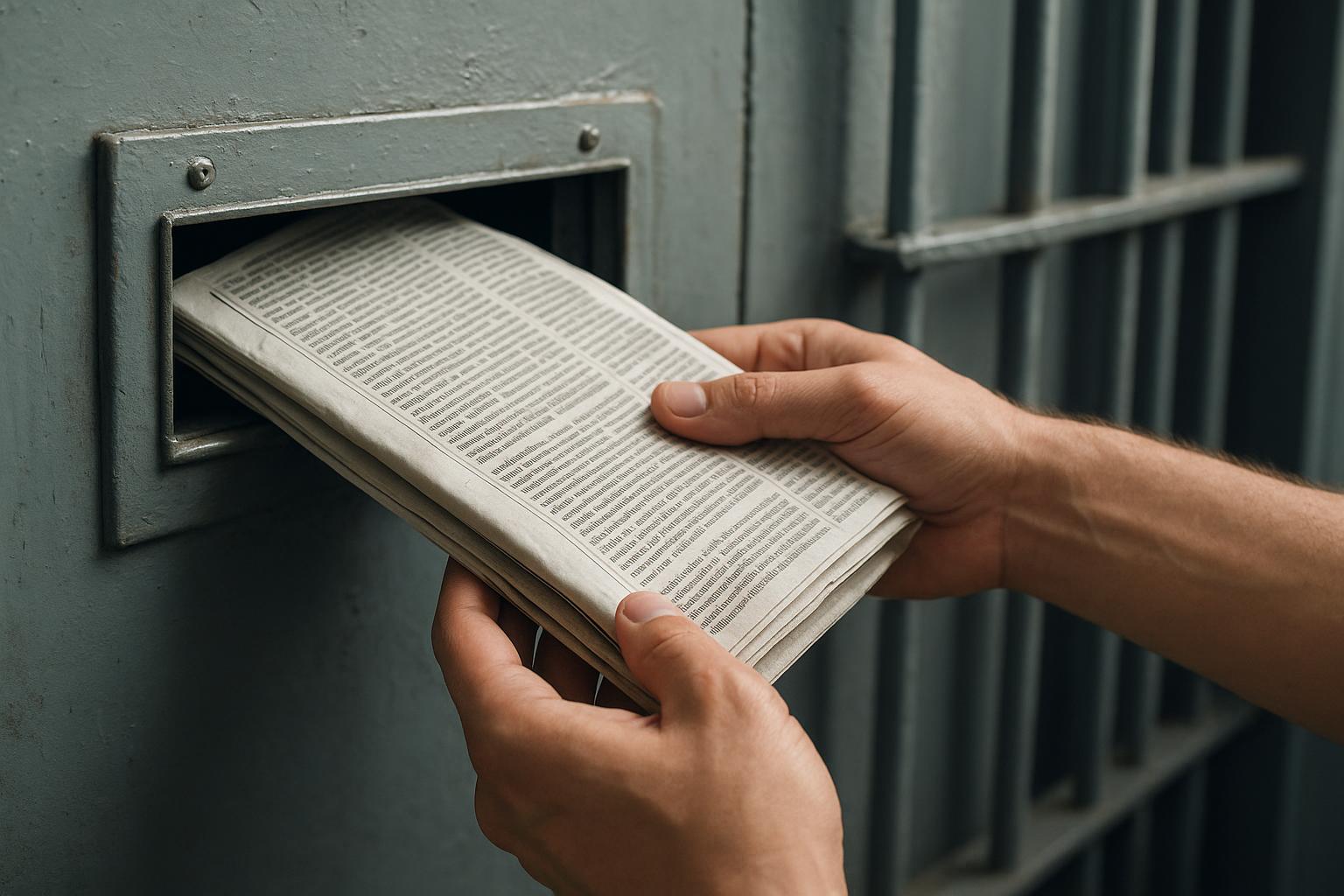
Prison mail rooms treat small pieces of paper differently than a regular mailbox. A torn-out article that you think is harmless can set off alarms: gangs use symbols, victims’ names can be sensitive, and some stories include content facilities won’t permit. The trick is knowing the rules and following them exactly.
## Newspaper Clippings To Inmates Policy: What Facilities Allow
Policies vary a lot. Some state prisons allow newspaper clippings in incoming mail as long as they’re single-sheet, not glued, and free of contraband. Other facilities refuse them outright, saying clippings can hide doodles, secret codes, or prohibited imagery. If you’re sending anything torn from a paper, check a facility’s mail guidelines first. Doing so avoids wasting time and getting mail returned to sender.
## Why Facilities Limit Clippings
There are practical reasons for strict rules. Mailrooms process thousands of items and need fast, consistent standards. A photocopy on plain paper can be scanned and stored more predictably than an irregularly torn clipping. Clippings can also be altered after publication. Staff worry about anything that might be used to transmit messages or to display gang signs.
Security is the headline concern. But there are other reasons, too: preservation of reading material, preventing illicit trading, and avoiding disputes among inmates over content. The result is a patchwork of rules that can feel arbitrary unless you know where to look.
### Common Restrictions
Most restrictions fall into familiar categories:
– Clippings must be from recognized publications or sent directly by publishers.
– Only single pages or single articles are allowed; multiple sheets can be considered a parcel.
– No staples, tape, gum, or other adhesives.
– No handwritten notes on the clipping.
– Images of nudity, explicit violence, or identifiable crime victims often get redacted or returned.
These are common, not universal. If you read an inmate newspaper policy and see allowed items listed, compare that to the particular rules for the facility you’re dealing with.
### Differences Between Jails And Prisons
County jails and state or federal prisons are not the same. Jails are short-term and often stricter about anything that takes storage space. Some jails prohibit clippings entirely. State prisons might allow them under tighter formatting rules. Federal Bureau of Prisons has its own standards and is typically clearer about acceptable formats. If you confuse the two and send clippings that violate the wrong set of rules, the material may never reach the inmate.
## How To Send Newspaper Clippings Safely
The safest route is to follow the mailroom’s preferred method. If the facility prefers photocopies, make a black-and-white copy on plain 8.5×11 paper. Don’t staple the copy. Don’t fold it multiple times. If the facility requires the article to come from the publisher, contact the newspaper and ask about subscription options or single-article mailings.
Label everything clearly. Include the inmate’s full name, ID number, housing unit, and the correct mailing adress. Mistakes here mean delays or returns. When in doubt, email or call the mailroom for clarification before sending.
### From Publishers Vs Personal Clippings
Some facilities only accept clippings sent directly from recognized publishers. That reduces the chance of tampering. If you’re sending something you cut out yourself, expect more scrutiny. A publisher-sent copy normally arrives flat, with a return address that mailroom staff can verify.
If the facility’s newspaper clippings policy allows personal clippings, ensure they’re neat. Trim ragged edges. Avoid glue or tape to stick articles to a backing. Mail crews will pull the article if it looks modified.
#### What To Include With Mail
Include a simple cover letter that names the article and its date. Keep it short. This helps staff spot potential issues quickly. If you can, cite the volume or page number so staff can verify the source without opening extra items.
## Packaging And Formatting Rules
Packaging matters more than most senders realize. Use a standard white envelope. Don’t use colored envelopes or ones with messages on the outside. Write clearly or print the address label. Avoid photographs or additional enclosures unless the facility explicitly allows them.
Keep it flat. Folded, crumpled, or stapled pages are more likely to be rejected. If your clipping is longer than one standard page, consider sending a photocopy of the relevant section only. Keep the content focused. A two-page feature might be fine, but a bulky packet becomes a contraband risk.
### How To Handle Rejected Mail
If mail is returned, inspect the rejection notice carefully. Facilities usually list the exact reason: “unauthorized content,” “not from a publisher,” or “contains writing.” Some facilities will destroy items without notifying the sender. If there’s an appeal process, follow it promptly and include any requested documentation, such as publisher verification.
If the facility retains the item, ask for a receipt or record. Recordkeeping is inconsistent across systems, so a phone call followed by an email can create a paper trail. If you’re the sender and the inmate tells you the item never arrived, ask the inmate to check with unit staff and request a mail log review.
## If Clippings Are Rejected: Practical Responses
People often panic when mail is returned. Don’t. Start by checking the facility’s published rules. If you missed an explicit prohibition, respect it and revise how you send future items. If the rejection seems arbitrary, document everything: save the envelope, keep the return notice, and note dates and times of calls. You can usually escalate to a superintendent or mailroom supervisor.
If content was rejected for being too graphic or containing a victim’s name, you can redact or remove those sections and resend a sanitized version. For legal reasons, do not try to conceal content; that will only worsen outcomes.
### Alternatives To Physical Clippings
There are ways to share articles without running into the clipping problem. Many facilities allow books, magazines, or subscriptions through approved vendors. You can purchase an inmate subscription if the facility permits it. Digital options exist in some places — secure tablets or kiosks where published news is available through approved apps. If the inmate has access to an approved tablet service, send links or suggest subscribing through that vendor.
Libraries within prisons sometimes accept donations of periodicals. Coordinating with a facility librarian or chaplain can be an effective route. It may take longer, but it avoids the mailroom filtering that trips up individual clippings.
## Reading The Fine Print: Where Policies Live
Most facilities publish their mail rules on a corrections department website. Local jails may print a pamphlet for visitors. Don’t rely on third-party summaries. Look for PDF mail guides. These often include a specific section labeled “newspaper clippings policy” or “personal correspondence rules.” If the language is vague, call the mailroom and ask a direct question: “Does this facility accept single-page newspaper clippings sent by family members?”
If you do reach a human, note their name and the date of the conversation. Mailroom staff can change practices informally, so written guidance is more reliable than a verbal promise.
### Variations To Expect
Expect oddball rules. One facility may allow clippings only if they’re from the “top half” of the page. Another insists on black-and-white copies. Some allow pictures, some ban them. These details matter for compliance and for the inmate’s comfort. If a clipping contains a sports section or comic strips, it might be easier to pass than an investigative piece about a local crime.
## The Role Of Contraband Definitions
Understanding contraband helps make sense of the rules. Contraband is anything not authorized that could harm security. That includes physical contraband like drugs, but also paper with hidden messages. If staff suspect a clipping carries coded instructions, they’ll block it. That’s why keeping items straightforward and verifiable reduces the chance of rejection.
## Practical Examples That Help
A friend sent a clipping about a local parade and had it returned because the article included a list of community volunteers — including a victim’s name tied to an ongoing case. Another person sent a sports column and it arrived without issue because the facility’s inmate newspaper policy specifically allowed sports coverage. These contrasts show that content matters as much as format.
If you’re unsure, try sending a headline and date on a standard sheet of paper first. If that gets through, follow up with a publisher-sent copy later. The small test can avoid a bigger mishap.
### When To Contact Legal Or Advocacy Groups
If you believe policy is being enforced in a discriminatory way or that mail is being improperly withheld, contact an advocacy group or a lawyer familiar with corrections mail issues. They can advise on inmate rights and the facility’s obligations. Sometimes a formal letter from an attorney prompts clearer explanations from the facility.
## A Simple Pre-Mail Checklist
Before you place something in the mailbox, run through this short checklist:
– Is the item allowed by the facility’s published newspaper clippings policy?
– Is the article sent from a recognized publisher if required?
– Is the clipping attached to anything or otherwise modified?
– Is the inmate’s full name and ID number on the outside?
– Did you use a plain white envelope and clear handwriting?
– Did you keep a copy or scan of what you mailed?
If the answer is “no” to any of these, fix it before sending. It’s faster than dealing with a returned item.
## How Staff Evaluate Content
Mailroom staff are trained to look for specific red flags: gang symbols, coded ink marks, hidden folds, and references to ongoing criminal activity. They also check for contraband embedded in thick paper or layered sections. Understanding what triggers scrutiny helps you avoid it. Keep things plain. Keep things simple.
If you need to send a time-sensitive clipping, let the mailroom know in advance. Some facilities have expedited review processes for legal mail or urgent news, though that’s not guaranteed.
## When An Inmate Requests Specific Articles
If an inmate asks you to send a specific article, ask them for the exact date, newspaper name, and page if possible. That detail helps when talking to publishers or when preparing a photocopy. If they’re requesting archives, many newspapers offer back-issue services that will mail directly to institutions. That can be the cleanest approach.
If the inmate requests daily clippings, consider a subscription or an approved delivery method rather than repeated personal mailings. It’s more reliable and reduces the chance of mailroom friction.
## Dealing With Emotional Content
Newspaper articles can be emotionally charged. If you’re sending something that references a victim, a criminal case, or a family dispute, anticipate problems. Facilities may refuse content that could incite violence or distress. Discuss sensitive clippings with the inmate first and consider omitting names or graphic details when possible.
Legal notices are treated differently. If an article pertains to legal matters involving the inmate, mark it as legal correspondence if the facility allows. Mislabeling can lead to further complications.
## Tracking And Documentation
Keep records. Keep scans of what you send and note tracking numbers if you use certified mail. If something goes missing, these details matter. Mailroom systems vary, and a clear trail helps resolve disputes faster. If the facility provided a reason for rejection, keep that notice. It will be useful if you need to appeal or resubmit the item in a compliant format.
If you’re unsure about any aspect of the newspaper clippings to inmates policy, pick up the phone. A two-minute call often saves weeks of back-and-forth mail. Staff appreciate precise questions, and clarifying before you send reduces stress for everyone involved.
Sometimes the rule will feel frustrating. That’s because the system prioritizes security over convenience. Know the rules, follow them, and you’ll get more reading material to the person who needs it. The next time you walk out of a store with a paper in your hand, think about whether it will survive the mailroom’s scrutiny before you tuck it into an envelope.





Leave a Reply