
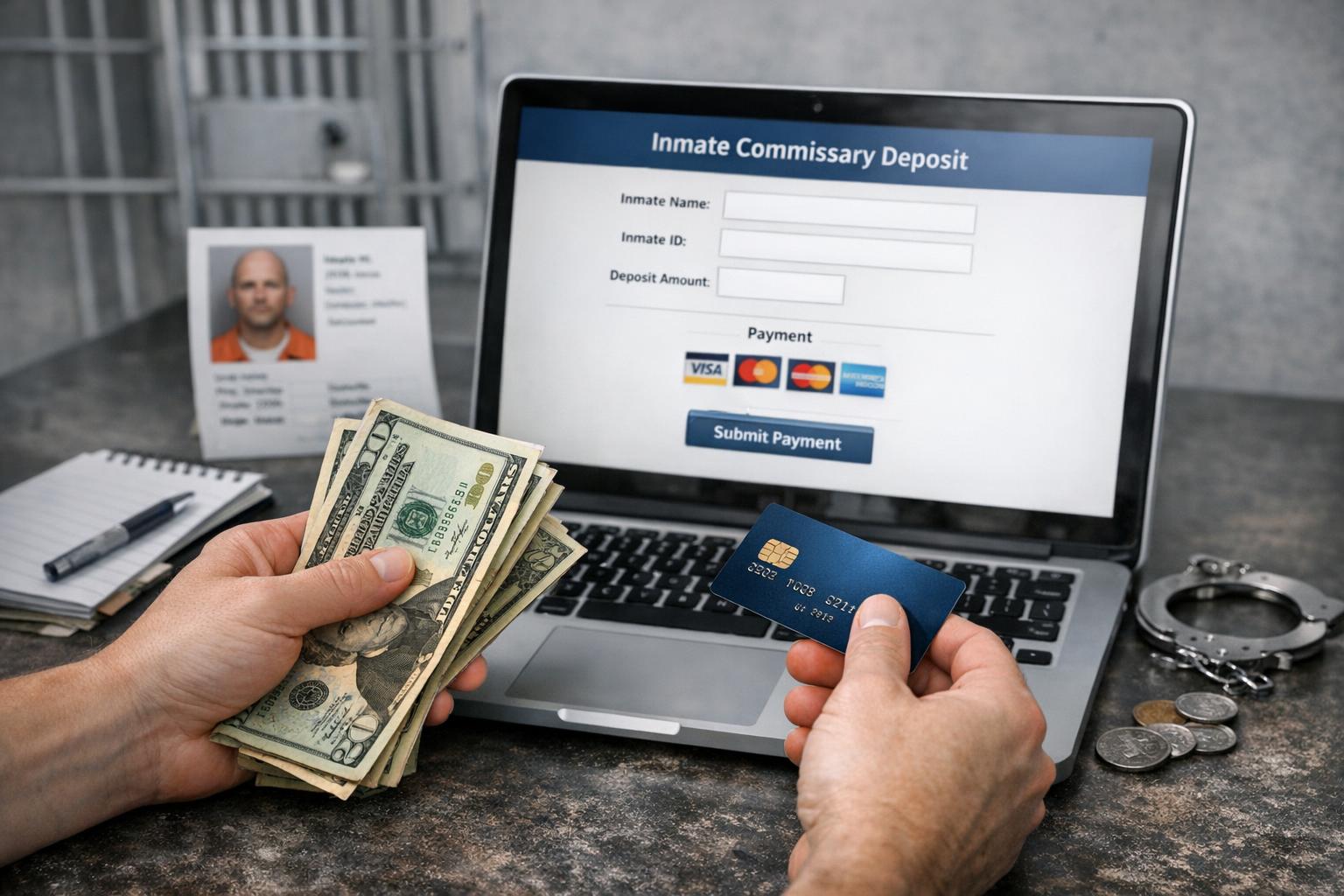
You need a reliable way to get money into someone’s commissary account. Guessing the vendor, misreading an ID number, or mailing the wrong form wastes time and triggers a headache for both you and the person inside. This guide cuts through the noise with practical, specific steps that work in most county, state, and federal facilities.
## How To Deposit Funds For Inmate Commissary: Practical Steps You Can Use Today
Start by getting three pieces of information: the inmate’s full booking name, their inmate ID number, and the facility’s exact name. That’s it. With those three things you can use nearly any method that facilities accept.
### Read The Facility Rules First
Each jail or prison runs commissary differently. Some allow online vendors only. Others take money orders at the mailroom. Before you send anything, go to the facility website or call the non-emergency line. Ask: who handles commissary, what payment methods they accept, any daily or weekly limits, and whether there’s a suspended account hold.
#### Why Facility Rules Matter
If you send a debit card payment to a vendor not contracted by the facility, the transfer can be rejected and refunded after fees. If a jail requires a specific ID format and you omit a leading zero, the money goes to no one. These are common, avoidable mistakes.
## How To Deposit Funds For Inmate Commissary Using Online Services
Online transfers are the most common route. Companies like JPay, TouchPay, Access Corrections, and Western Union have portals for commissary deposits. They vary by price and processing time.
### Typical Online Workflow
1. Create an account on the vendor’s website.
2. Enter the facility name, inmate ID, and inmate birthdate if requested.
3. Choose payment method — credit/debit, ACH, or sometimes PayPal.
4. Confirm fees and delivery time.
5. Submit and save the reciept or confirmation number.
Online systems often show the inmate’s balance change within 24 hours. If it’s a weekend or the facility has manual processing, it may take longer.
#### Fees, Limits, And Holds
Expect service fees. Many vendors charge a flat fee plus a percentage for card payments. ACH is usually cheaper but slower. Facilities might cap commissary deposits per day or per week. Also, if the inmate is on disciplinary hold, commissary deposits may be restricted. Ask about refund policy up front.
## How To Deposit Funds For Inmate Commissary By Mail
If the jail accepts money orders, this method is low-tech and reliable when done right.
### How To Send A Money Order
Make the money order payable to the inmate or to the facility according to the facility’s instructions. On the stub, clearly print the inmate’s full name and ID. Include any required deposit slip the jail provides on its website.
#### Common Mail Mistakes
People forget to include the ID number or write the facility name unclearly. These errors delay posting. Use a plain envelope. Don’t send cash. If you want tracking, send via certified mail.
## In-Person Deposits: Kiosks And Cash At The Lobby
Many jails have lobby kiosks that accept cash or cards. County facilities sometimes allow cash deposits through a kiosk during visiting hours.
### How Kiosk Deposits Work
Bring the inmate’s ID number and your payment. The kiosk prints a receipt immediately. Keep it. If the system fails, the printed receipt is your proof to escalate the issue with the jail’s finance office.
#### What To Watch For
Kiosks may have hours. They can go offline during staff shift changes or system maintenance. Some require a separate account registration beforehand. Call first if you plan a last-minute deposit.
## Phone Deposits And Assisted Transfers
Some vendors take credit card deposits over the phone. This is helpful if you don’t have internet access.
### Security And Verification
Phone reps will ask for facility details and often require the inmate ID. They may run the card as a one-time payment or add funds to your vendor account for future use. Ask the representative for a confirmation number and follow up online if possible.
## Handling Refunds, Rejected Payments, And Errors
Mistakes happen. Know the right escalation path and timelines.
### Steps When A Deposit Fails
1. Save the confirmation number or the money order receipt.
2. Contact the vendor first — they can often trace payments quickly.
3. If the vendor says the facility rejected the payment, contact the facility’s finance or commissary office.
4. File a dispute with your bank if a charge was unauthorized.
Document every call, date, and name. That record helps when chasing refunds weeks later.
## Managing Inmate Commissary Funds: Tips For Families
Think like a budgeter. Commissary accounts are limited and fees eat value. The person inside should know how to manage their purchases, but you can help from outside.
### Smart Depositing Strategy
– Send larger amounts less frequently if fees are high. A $50 deposit with a $5 fee wastes less than depositing $10 five times.
– Coordinate with other family members to avoid overlapping deposits.
– Use ACH when available — lower fees, better value.
Use the facility’s commissary price list if it’s posted. Snacks, hygiene, and writing supplies often have the best value per dollar.
## Commissary Deposits For Bonded Or Pretrial Detainees
Pretrial detention and bond status change how commissary works. Some jails restrict commissary access for newly booked people for 48-72 hours. Bond payments do not usually affect commissary access unless the inmate is transferred.
### Transfers And Account Continuity
If someone moves between facilities, funds don’t always move with them. The receiving facility might require a new account setup. When transfers are expected, wait until the inmate is settled or follow both facilities’ transfer policies.
## What To Do If The Facility Uses A Third-Party Vendor You Don’t Recognize
When you see a different vendor name on the facility website, go with that vendor. Using the facility’s contracted vendor avoids bounced transfers and extra processing times.
### Confirming Vendor Through Multiple Sources
If the facility website is unclear, call the jail’s main line and ask which company handles commissary deposits. Many county sheriff’s offices list vendor names on a public roster.
## Special Circumstances: Federal Prisons, Juvenile Facilities, And Work Release
Federal Bureau of Prisons has its own system (usually Federal Reserve or Trust Fund), while juvenile facilities and work release programs have stricter rules about cash and gifts.
### Federal Prison Deposits
Follow the BOP guidelines and use their authorized deposit methods. Federal mailrooms are strict; misaddressed packages or cash are returned or discarded.
## Recordkeeping And Proof: Avoiding Future Arguments
Keep screenshots, reciepts, and confirmation emails. If you deposit via money order, staple the stub to a copy of the facility instructions showing the accepted format. That makes disputes faster to resolve.
### What Info To Save
– Transaction confirmation number
– Date and time of deposit
– Amount and fee charged
– Screenshot of the inmate’s account showing the deposit, if available
## When You Need Money In The Cell Right Away
Same-day or expedited options exist but cost more. Some vendors offer instant credit for card payments. The facility must still accept the vendor’s posting.
### Emergency Transfer Notes
If a loved one needs medical items or phone credit immediately, call the vendor’s customer service before paying. Ask how long the transfer typically takes to post for that facility. Sometimes a phone call to the facility’s control center can move things along, but that’s rare.
## How To Avoid Common Pitfalls That Lock Up Funds
– Never send cash in the mail.
– Never guess the facility name.
– Never omit the inmate ID.
– Read the vendor’s refund policy before paying.
If you follow those simple rules you cut the odds of lost funds by a lot.
## How To Deposit Funds For Inmate Commissary When You Don’t Have Full Details
If you only have a name and city, contact the facility directly. Provide the person’s birthdate and known aliases. The facility staff can usually match the person to an inmate ID and tell you authorized deposit routes.
### If The Facility Won’t Confirm Identity
Some jails won’t discuss inmates with third parties for privacy. In that case, arrange a phone call or message exchange with the inmate so they can provide the exact ID and accepted deposit methods.
## Final Practical Checklist Before You Press Send
– Confirm facility name and vendor.
– Get the inmate ID and full booking name.
– Choose payment method (online, kiosk, money order).
– Note fees and expected posting time.
– Save confirmation and reciept proof.
– Alert the inmate so they know to expect the deposit.
This process reduces surprises and speeds up access to inmate commissary funds. Follow it once and it becomes routine, so you stop losing time and money over small mistakes.





Leave a Reply